Quotessence
Home / Quotes / Quote by Khaled Hosseini

Quote by Khaled Hosseini

“The hallway's walls are covered now with posters, of dinosaurs, cartoon characters, the Buddhas of Bamiyan, and displays of artwork by the orphans. Many of the drawings depict tanks running over huts, men brandishing AK-47s, refugee camp tents, scenes of jihad.”

Quote by Khaled Hosseini

Work

A Thousand Splendid Suns

This novel delves into the lives of two women in Afghanistan, highlighting their struggles and triumphs amidst political turmoil and personal tragedy. The narrative weaves through decades, showcasing the evolving dynamics of their relationships and the resilience of the human spirit in a challenging environment. more

Author
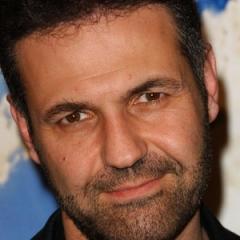
Khaled Hosseini
Khaled Hosseini

Khaled Hosseini is an Afghan-American novelist, best known for his novel 'The Kite Runner,' which has become a global bestseller. The story, centered around themes of friendship, betrayal, and redemption, has resonated with readers worldwide. Hosseini's works often focus on the history and culture of Afghanistan, as well as the complexities of human nature. more

You May Also Like

“I am eager to expose “You can’t say you can’t play” to public scrutiny. The teachers are cooperative and curious. They are quite used to my passionate espousals, and this is a problem about which there is widespread concern. In general, the approach has been to help the outsiders develop the characteristics that will make them more acceptable to the insiders. I am suggesting something different: The group must change its attitudes and expectations towards those who, for whatever reason, are not yet part of the system.”

“Fericirea este potențialul nostru, produsul unei minți căreia i se permite să gândească așa cum are nevoie să o facă, care are suficient din ce este necesar, care nu e afectată de greutatea cumplită a bullying-ului. Când suntem copii, tolerăm condiții de muncă pe care le-am considera inacceptabile ca adulți: expunerea constantă a realizărilor noastre în fața unei audiențe ostile; motivația prin amenințare în loc de încurajare; lumea socială în care se face mișto de tine și ești sâcâit, în care cele mai jenante dorințe ale tale sunt expuse, în care corpul tău nou format este expus unui gen de examinare care ar distruge un adult. Adesea, în timpul copilăriei, asta vine la pachet și cu amenințări fizice - să fii împins și tras la locul de joacă, lovit cu pumnii sau picioarele. Eterna amenințare că ceva și mai sălbatic te așteaptă după colț pe drumul spre casă. Imaginați-vă cum ați percepe asta ca adulți: acea amenințare permanentă la adresa integrității corpului tău și a sănătății tale mintale. Nu am accepta niciodată așa ceva, dar am acceptat asta când eram copii pentru că asta se aștepta de la noi și nu aveam altă variantă.”

“I wondered why, after such a great loss, they ever let us out of their sight. Later I realized that it was their way of fighting that loss, sitting there in the darkness and feeling, vicariously, our hearts running through the night, and through the woods-a way of speaking to the sorrow, and to Mother, too-a way of saying that all had not been for naught, that her children's lives and joy would be irrepressible, because they had come out of her.”

“Zoki walks into the classroom, puts a piece of paper down on the teacher’s desk, and shouts: “Everyone write your name.” There are three columns: Muslim / Serb / Croat. We all gather round, we all hesitate. “Come on, guys.” Zoki writes his name under Serb. Kenan takes the pen from Zoki and writes his name under Muslim. Both Gorans put their names under Serb. Edin puts his name under Muslim. Alen puts his name under Muslim. Marica puts her name under Serb. Goca puts her name under Serb. Kule asks what this is all about. Zoki says: “So we know.” Kule says: “Fuck you.” Zoki says: “Anyway, you’re Muslim.” “What I am is Fuck you,” Kule says. Elvira makes a new column, writes Don’t know at the top, and puts her name there. Alen takes the pen back and crosses his name out and writes it again under Don’t know. Goca too. Marko puts his name under Serb. Ana puts her name under Don’t know, thinks for a second, crosses it out, adds Yugoslav as a fifth heading, and puts her name there. Zoki writes Kule under Muslim. Kule says: “Zoki, you dumb horse, I’ll fuck your mother.” The Gorans plant themselves in front of Kule and the one with the long incisors says: “What’s wrong, Kule? Shoes too tight?” Kule grabs the pen out of Zoki’s hand and tries to scribble something on Goran’s forehead. Goran shoves him, Kule shoves back, and we move between them. Everyone’s shouting all at once until Kule raises his arm—the gesture says, Everything’s cool, I’m cool. He goes up to the desk and makes a sixth column. On top it says, Fuck all of you. Kule writes Kule in that column, stomps on the pen, which breaks, and leaves the classroom. No one follows Kule. The list disappears. A couple months later, Muslims in several cities are ordered to wear white armbands. An Eskimo family lived in Višegrad at the time, above the supermarket on Tito Street. Actually they had no connection with the Inuit—it was just a joke answer on the 1991 census, which was included in the actual statistics and then recognized by the state. The father repeated it during the Serbian occupation, but no one laughed. So he left the city, with his wife and baby daughter. Today they live closer to the North Pole and speak decent Swedish.”