Quotessence
Home / Quotes / Quote by Oscar Wilde

Quote by Oscar Wilde

“The only thing that one really knows about human nature is that it changes. Change is the one quality we can predicate of it. The systems that fail are those that rely on the permanency of human nature, and not on its growth and development.”

Quote by Oscar Wilde

Work

The Soul of Man under Socialism

This work delves into the essence of human nature and its interaction with socialist ideologies, offering a critical analysis of the impact of social systems on the individual. more

Author
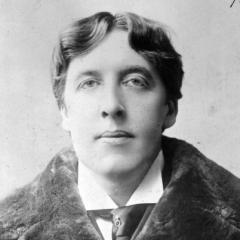
Oscar Wilde
Oscar Wilde

Oscar Wilde, born on October 16, 1854, in Ireland, and died on November 30, 1900, was a renowned Irish writer, playwright, and poet. His works are known for their wit, satire, and unique style, with notable works including 'The Picture of Dorian Gray' and 'Lady Windermere's Fan'. more

You May Also Like

“Much of the difficulty in attempting to restructure American and other societies arises form this resistance by groups with vested interests in the status quo. Significant change might require those who are now high in the hierarchy to move downward many steps. This seems to them undesirable and its resisted.”

“Such is the pure movement of nature prior to all reflection. Such is the force of natural pity, which the most depraved mores still have difficulty destroying, since everyday one sees in our theaters someone affected and weeping at the ills of some unfortunate person, and who, were he in the tyrant's place, would intensify the torments of his enemy still more; [like the bloodthirsty Sulla, so sensitive to ills he had not caused, or like Alexander of Pherae, who did not dare attend the performance of any tragedy, for fear of being seen weeping with Andromache and Priam, and yet who listened impassively to the cries of so many citizens who were killed everyday on his orders. Nature, in giving men tears, bears witness that she gave the human race the softest hearts.] Mandeville has a clear awareness that, with all their mores, men would never have been anything but monsters, if nature had not given them pity to aid their reason; but he has not seen that from this quality alone flow all the social virtues that he wants to deny in men. In fact, what are generosity, mercy, and humanity, if not pity applied to the weak, to the guilty, or to the human species in general. Benevolence and even friendship are, properly understood, the products of a constant pity fixed on a particular object; for is desiring that someone not suffer anything but desiring that he be happy?”

“For human nature is such that grief and pain—even simultaneously suffered—do not add up as a whole in our consciousness, but hide, the lesser behind the greater, according to a definite law of perspective. It is providential and is our means of surviving in the camp. And this is the reason why so often in free life one hears it said that man is never content. In fact it is not a question of a human incapacity for a state of absolute happiness, but of an ever-insufficient knowledge of the complex nature of the state of unhappiness; so that the single name of the major cause is given to all its causes, which are composite and set out in an order of urgency. And if the most immediate cause of stress comes to an end, you are grievously amazed to see that another one lies behind; and in reality a whole series of others.”

“The argument has long been made that we humans are by nature compassionate and empathic despite the occasional streak of meanness, but torrents of bad news throughout history have contradicted that claim, and little sound science has backed it. But try this thought experiment. Imagine the number of opportunities people around the world today might have to commit an antisocial act, from rape or murder to simple rudeness and dishonesty. Make that number the bottom of a fraction. Now for the top value you put the number of such antisocial acts that will actually occur today. That ratio of potential to enacted meanness holds at close to zero any day of the year. And if for the top value you put the number of benevolent acts performed in a given day, the ratio of kindness to cruelty will always be positive. (The news, however, comes to us as though that ratio was reversed.) Harvard's Jerome Kagan proposes this mental exercise to make a simple point about human nature: the sum total of goodness vastly outweighs that of meanness. 'Although humans inherit a biological bias that permits them to feel anger, jealousy, selfishness and envy, and to be rude, aggressive or violent,' Kagan notes, 'they inherit an even stronger biological bias for kindness, compassion, cooperation, love and nurture – especially toward those in need.' This inbuilt ethical sense, he adds, 'is a biological feature of our species.”