Quotessence
Home / Quotes / Quote by Primo Levi

Quote by Primo Levi

“For human nature is such that grief and pain—even simultaneously suffered—do not add up as a whole in our consciousness, but hide, the lesser behind the greater, according to a definite law of perspective. It is providential and is our means of surviving in the camp. And this is the reason why so often in free life one hears it said that man is never content. In fact it is not a question of a human incapacity for a state of absolute happiness, but of an ever-insufficient knowledge of the complex nature of the state of unhappiness; so that the single name of the major cause is given to all its causes, which are composite and set out in an order of urgency. And if the most immediate cause of stress comes to an end, you are grievously amazed to see that another one lies behind; and in reality a whole series of others.”

Quote by Primo Levi

Work

Survival In Auschwitz

This book offers a first-hand perspective on the extreme conditions and hardships faced by inmates in the Auschwitz concentration camp, providing a profound and disturbing insight into the human capacity for endurance and resilience amidst unimaginable suffering. more

Author
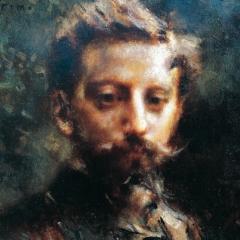
Primo Levi
Primo Levi

Chemist and Italian Jewish author, known for his dual identity as a survivor of Nazi concentration camps and a chemist. His works profoundly reflect the moral dilemmas and psychological states of humans in extreme environments. more

You May Also Like

“The argument has long been made that we humans are by nature compassionate and empathic despite the occasional streak of meanness, but torrents of bad news throughout history have contradicted that claim, and little sound science has backed it. But try this thought experiment. Imagine the number of opportunities people around the world today might have to commit an antisocial act, from rape or murder to simple rudeness and dishonesty. Make that number the bottom of a fraction. Now for the top value you put the number of such antisocial acts that will actually occur today. That ratio of potential to enacted meanness holds at close to zero any day of the year. And if for the top value you put the number of benevolent acts performed in a given day, the ratio of kindness to cruelty will always be positive. (The news, however, comes to us as though that ratio was reversed.) Harvard's Jerome Kagan proposes this mental exercise to make a simple point about human nature: the sum total of goodness vastly outweighs that of meanness. 'Although humans inherit a biological bias that permits them to feel anger, jealousy, selfishness and envy, and to be rude, aggressive or violent,' Kagan notes, 'they inherit an even stronger biological bias for kindness, compassion, cooperation, love and nurture – especially toward those in need.' This inbuilt ethical sense, he adds, 'is a biological feature of our species.”

“he would now have comprehended that work consists of whatever a body is obliged to do, and that play consists of whaterver a body is not obliged to do. And this would help him to understand why construcing artificial flowers or performing on a tread-mill, is work, whilst rolling nine-pins or climbing Mont Blanc is only amusement. There are wealthy gentlemen in England who drive four-horse passenger-coaches twenty or thirty miles on a daily line, in the summer, because the privilege costs them considerable money; but if they were offered wages for the service that would turn it into work, then they would resign.”

“What's with all the cheering over the apocalypse, anyway? Oh, yay, we get to kill poor helpless humans." "The excitement over the apocalypse had nothing to do with humans." "Could have fooled me." "Humans are incidental." "Killing and destroying an entire species is incidental?" I can't help but sound like I'm accusing him (Raffe), even though I know he wasn't part of the plan to wipe us out. Or at least, I think he wasn't personally involved, but I don't really know that, do I? "Your people have been doing it to all kinds of species." "That's not the same." "Why not?”

“It's natural for a man to defend what's dear to him: his own life, his home, his family. But in order to make him fight on behalf of his rulers, the rich and powerful who are too cunning to fight their own battles-in short to defend not himself but people whom he's never met and moreover would not care to be in the same room with him-you have to condition him into loving violence not for the benefits it bestows on him but for its own sake. Result: the society has to defend itself from its defenders, because what's admirable in wartime is termed psychopathic in peace. It's easier to wreck a man than to repair him. Ask any psychotherapist. And take a look at the crime figures among veterans.”

“To see an almost certain horrible death--you know how crowds all sit at the edge of their seats, /praying/ subconsciously for a spectacular accident--and then to be whisked away from it so suddenly--brought to the edge of tragedy, and then to have their better natures win out, showing them how much nicer they always /knew/ they were--that was the supreme thrill.”