Quotessence
Home / Quotes / Quote by Margaret Mitchell

Quote by Margaret Mitchell

Work

Gone with the wind

Margaret Mitchell's 'Gone with the Wind' is a sweeping historical romance that follows the adventures of Scarlett O'Hara, a headstrong and ambitious woman living in the American South. The story spans the tumultuous years of the Civil War and the subsequent Reconstruction era, capturing the social and political changes that reshape the lives of its characters. Known for its vivid portrayal of the antebellum South and its characters, the novel has become a staple of American literature. more
Author

Margaret Mitchell
Margaret Mitchell

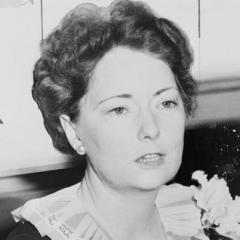
Margaret Mitchell, an American author born on November 8, 1900, and died on August 16, 1949, is best known for her novel 'Gone with the Wind'. This historical novel, set against the backdrop of the American Civil War and Reconstruction, has won the hearts of readers worldwide. more

You May Also Like

“The number of chances you give someone doesn't tell the world how loving you are without telling them how desperate you are to believe they care as much as you. True love resides in the first chance, stupidity in the second, opportunists in the third and scoundrels in the fourth.”

“Robin: When you do marry, who will you marry? Maria: I have not quite decided yet, but I think I shall marry a boy I knew in London. Robin(yells): What? Marry some mincing nincompoop of a Londoner with silk stockings and a pomade in his hair and face like a Cheshire cheese? You dare do such a thing! You - Maria - if you marry a London man I'll wring his neck! (...) I'll not only wring his neck, I'll wring everybody's necks, and I'll go right away out of the valley, over the hills to the town where my father came from, and I won't ever come back here again. So there! (...) Maria: Why don't you want me to marry that London boy? Robin(shouting): Because you are going to marry me. Do you hear, Maria? You are going to marry me.”

“A wife! No one else could love a man who had been trampled on by iron feet. She would wash his feet after he had been spat on; she would comb his tangled hair; she would look into his embittered eyes. The more lacerated his soul, the more revolting and contemptible he became to the world, the more she would love him. She would run after a truck; she would wait in queues on Kuznetsky Most, or even by the camp boundary fence, desperate to hand over a few sweets or an onion; she would bake shortbread for him on an oil stove; she would give years of her life just to be able to see him for half an hour... Not every woman you sleep with can be called a wife.”