Quotessence
Home / Quotes / Quote by John Knowles

Quote by John Knowles

“I had to be right in never talking about what you could not change, and I had to make many people agree that I was right. None of them ever accused me of being responsible for what had happened to Phineas, either because they could not believe it or because they could not understand it. I would have talked about that, but they would not, and I would not talk about Phineas in any other way.”

Quote by John Knowles

Author
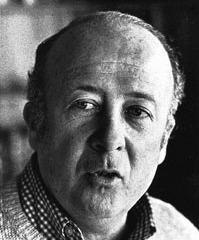
John Knowles
John Knowles

John Knowles was an American novelist born on September 16, 1926, and passed away on November 29, 2001. Known for his profound psychological portrayals and insights into American social issues, his works include the classic novel 'A Separate Peace'. more

You May Also Like

“The cracks grew over him like vines, faster and faster. At first he bucked, whinnying metallic screeches. Then he gradually stilled, looking up at me with frightened glass eyes. He was growing. New, molten glass leeched out between his fissures, cooled and hardened only to crack again and make room for more liquid glass. The gears inside him moaned and creaked, and metal filings gathered at the base of his transparent stomach, only to fly up again and form more joints and chains and gears. Black smoke poured from his nostrils. Soon he was the size of a large dog, then a man, and still he grew and grew until he towered over my bed, as big as any plow horse I’d ever seen. Glass dripped down his flanks like sweat, a few rivulets still glowing with molten heat.”

“To speak of a communication failure implies a breakdown of some sort. Yet this does not accurately portray what occurs. In truth, communication difficulties arise not from breakdown but from the characteristics of the system itself. Despite promising beginnings in our intimate relationships, we tend over time to evolve a system of communication that suppresses rather than reveals information. Life is complicated, and confirming or disconfirming the well-being of a relationship takes effort. Once we are comfortably coupled, the intense, energy-consuming monitoring of courtship days is replaced by a simpler, more efficient method. Unable to witness our partners’ every activity or verify every nuance of meaning, we evolve a communication system based on trust. We gradually cease our attentive probing, relying instead on familiar cues and signals to stand as testament to the strength of the bond: the words “I love you,” holidays with the family, good sex, special times with shared friends, the routine exchange, “How was your day?” We take these signals as representative of the relationship and turn our monitoring energies elsewhere. ... Not only do the initiator’s negative signals tend to become incorporated into the existing routine, but, paradoxically, the initiator actively contributes to the impression that life goes on as usual. Even as they express their unhappiness, initiators work at emphasizing and maintaining the routine aspects of life with the other person, simultaneously giving signals that all is well. Unwilling to leave the relationship yet, they need to privately explore and evaluate the situation. The initiator thus contrives an appearance of participation,7 creating a protective cover that allows them to “return” if their alternative resources do not work out. Our ability to do this—to perform a role we are no longer enthusiastically committed to—is one of our acquired talents. In all our encounters, we present ourselves to others in much the same way as actors do, tailoring our performance to the role we are assigned in a particular setting.8 Thus, communication is always distorted. We only give up fragments of what really occurs within us during that specific moment of communication.9 Such fragments are always selected and arranged so that there is seldom a faithful presentation of our inner reality. It is transformed, reduced, redirected, recomposed.10 Once we get the role perfected, we are able to play it whether we are in the mood to go on stage or not, simply by reproducing the signals. What is true of all our encounters is, of course, true of intimate relationships. The nature of the intimate bond is especially hard to confirm or disconfirm.11 The signals produced by each partner, while acting out the partner role, tend to be interpreted by the other as the relationship.12 Because the costs of constantly checking out what the other person is feeling and doing are high, each partner is in a position to be duped and misled by the other.13 Thus, the initiator is able to keep up appearances that all is well by falsifying, tailoring, and manipulating signals to that effect. The normal routine can be used to attest to the presence of something that is not there. For example, initiators can continue the habit of saying, “I love you,” though the passion is gone. They can say, “I love you” and cover the fact that they feel disappointment or anger, or that they feel nothing at all. Or, they can say, “I love you” and mean, “I like you,” or, “We have been through a lot together,” or even “Today was a good day.”

“We just remained very calm and for the first time talked about separating. We spent like a month and a half together after that, and then moved out simultaneously from the apartment to different places on the same day. We even said, look, you know, you’re not going to leave me, I’m not going to leave you. we’ll just move out on the same day. It was apparent that we were both ready to do this. When the time came I helped her move some of her things and she helped me move some of my things. The feeling between us was almost like lovers who for some reason had to leave each other. The night that we said goodbye—it was like 11 o’clock and the house was empty. Everything had been put into trucks and moved and so forth and we were in the house and there was no place else to go and so we sat down on the floor and laying down on the floor in our overcoats and I held her and we both cried and it was just heartrending and then we just separated and that was pretty much it. [SUPERVISOR, AGE 38, DIVORCED AFTER 19 YEARS]”

“Then I didn’t think much about it, I just did it. I started wearing some of the things he left behind, especially his bathrobe, some shirts too, but only in the house. I read his books, I am embarrassed at this. I also did some things to the place I knew he would like. He always complained about my plants, so I got rid of them. It seems strange to think about it now, but at the time I found some comfort in it. [ACCOUNTANT, AGE 38, SEPARATED AFTER LIVING TOGETHER 13 YEARS]”

“I knew that I was in better shape than she was because I was the one who pushed for the split. Still, even a year later I was still very vulnerable to her actions. If I saw her at the supermarket, or someone brought her name up, or if she called about something, which she seemed to do pretty often—like she was trying to find stuff to talk to me about, did I see the exhibit, so-and-so called, the dog got sick, you know—I was always upset by it, by talking to her, being reminded of her. I just wanted it to be over and it just took a long time for that to happen, for that connection to be broken. [DENTAL ASSISTANT, AGE 27, SEPARATED AFTER LIVING TOGETHER 3 YEARS]”

“We all are secret-keepers in our intimate relationships. We keep secrets from our partners about daily encounters, former lovers, true feelings about sex, friends, in-laws, finances, personal hopes, and worries about work, health, love, and life. It may be, in fact, that keeping these secrets makes all relationships possible. If our partners knew every thought, every nuance of our selves, our relationships would run the risk of succumbing from either constant turmoil or—perhaps worse—a tedious matter-of-factness devoid of surprises. Whatever their contribution to the maintenance of our unions, secrets also contribute to their collapse.”

“If through no fault of his own the hero is crushed by a bulldozer in Act II, we are not impressed. Even though life is often like this—the absconding cashier on his way to Nicaragua is killed in a collision at the airport, the prominent statesman dies of a stroke in the midst of the negotiations he has spent years to bring about, the young lovers are drowned in a boating accident the day before their marriage—such events, the warp and woof of everyday life, seem irrelevant, meaningless. They are crude, undigested, unpurged bits of reality—to draw a metaphor from the late J. Edgar Hoover, they are “raw files.” But it is the function of great art to purge and give meaning to human suffering, and so we expect that if the hero is indeed crushed by a bulldozer in Act II there will be some reason for it, and not just some reason but a good one, one which makes sense in terms of the hero’s personality and action. In fact, we expect to be shown that he is in some way responsible for what happens to him.”