Quotessence
Home / Quotes / Quote by Rainer Maria Rilke

Quote by Rainer Maria Rilke

“How surely gravity's law, strong as an ocean current, takes hold of the smallest thing and pulls it toward the heart of the world. Each thing--- each stone, blossom, child--- is held in place. Only we, in our arrogance, push out beyond what we each belong to for some empty freedom. If we surrendered to earth's intelligence we could rise up rooted, like trees. Instead we entangle ourselves in knots of our own making and struggle, lonely and confused. So like children, we begin again to learn from the things, because they are in God's heart; they have never left him. This is what the things can teach us: to fall, patiently to trust our heaviness. Even a bird has to do that before he can fly.”

Quote by Rainer Maria Rilke

Work

Rilke's Book of Hours: Love Poems to God

This book features a series of meditative poems that delve into themes of devotion, love, and the human search for meaning in the divine. Rilke's lyrical prose and introspective tone are showcased in this compilation of his most personal and religious works. more

Author
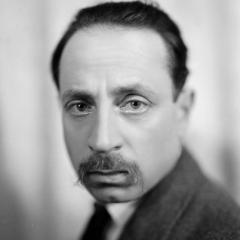
Rainer Maria Rilke
Rainer Maria Rilke

German poet known for his profound poetry and epistolary works. Rainer Maria Rilke's poetry style is unique, often exploring themes such as loneliness, love, and religious faith. more

You May Also Like

“A sovereign cannot raise an army because he is enraged, nor can a general fight because he is resentful. For while an angered many may again be happy, and a resentful man again be pleased, a state that has perished cannot be restored, nor can the dead be brought back to life. Therefore, the enlightened ruler is prudent and the good general is warned against rash action. Thus the state is kept secure and the army preserved.”

“A man eager to climb famous mountains must have the patience to follow a winding path. A man eager to eat bear's paw must have the patience to simmer it slowly. A man eager to watch the moonlight must have the patience to wait until midnight. A man eager to see a beautiful woman must have the patience to let her finish her toilette. Reading requires patience too.”

“On Pleasure Pleasure is a freedom-song, But it is not freedom. It is the blossoming of your desires, But it is not their fruit. It is a depth calling unto a height, But it is not the deep nor the high. It is the caged taking wing, But it is not space encompassed. Aye, in very truth, pleasure is a freedom-song. And I fain would have you sing it with fullness of heart; yet I would not have you lose your hearts in the singing. Some of your youth seek pleasure as if it were all, and they are judged and rebuked. I would not judge nor rebuke them. I would have them seek. For they shall find pleasure, but not her alone; Seven are her sisters, and the least of them is more beautiful than pleasure. Have you not heard of the man who was digging in the earth for roots and found a treasure? And some of your elders remember pleasures with regret like wrongs committed in drunkenness. But regret is the beclouding of the mind and not its chastisement. They should remember their pleasures with gratitude, as they would the harvest of a summer. Yet if it comforts them to regret, let them be comforted. And there are among you those who are neither young to seek nor old to remember; And in their fear of seeking and remembering they shun all pleasures, lest they neglect the spirit or offend against it. But even in their foregoing is their pleasure. And thus they too find a treasure though they dig for roots with quivering hands. But tell me, who is he that can offend the spirit? Shall the nightingale offend the stillness of the night, or the firefly the stars? And shall your flame or your smoke burden the wind? Think you the spirit is a still pool which you can trouble with a staff? Oftentimes in denying yourself pleasure you do but store the desire in the recesses of your being. Who knows but that which seems omitted today, waits for tomorrow? Even your body knows its heritage and its rightful need and will not be deceived. And your body is the harp of your soul, And it is yours to bring forth sweet music from it or confused sounds. And now you ask in your heart, “How shall we distinguish that which is good in pleasure from that which is not good?” Go to your fields and your gardens, and you shall learn that it is the pleasure of the bee to gather honey of the flower, But it is also the pleasure of the flower to yield its honey to the bee. For to the bee a flower is a fountain of life, And to the flower a bee is a messenger of love, And to both, bee and flower, the giving and the receiving of pleasure is a need and an ecstasy.”