Quotessence
Home / Quotes / Quote by Milan Kundera

Quote by Milan Kundera

“But it was not only a feeling of guilt which drove him into danger. He detested the pettiness that made life semilife and men semimen. He wished to put his life on one of a pair of scales and death on the other. He wished each of his acts, indeed each day, each hour, each second of his life to be measured against the supreme criterion, which is death. That was why he wanted to march at the head of the column, to walk on a tightrope over an abyss, to have a halo of bullets around his head and thus to grow in everyone's eyes and become unlimited as death is unlimited. . .”

Quote by Milan Kundera

Work

Life is Elsewhere

Browse quotes and source details for this work. more

Author

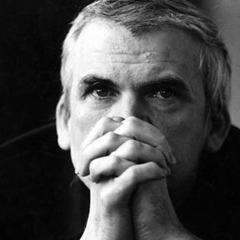
Milan Kundera
Milan Kundera

Milan Kundera is a renowned Czech-French writer known for his profound psychological insights and unique narrative techniques. His works often explore themes of personal freedom, love, morality, and existentialism, with notable titles including 'The Unbearable Lightness of Being' and 'The Joke'. more

You May Also Like

“إن الناس لا يحبون بعضهم بعضا بما فيه الكفاية... وهم حينما يبدون الحب يخفون الحسد, وحينما يظهرون الشفقة يخفون الحقد .. و زوال الطبقات, والمساواة في الفرص .. وتيسير الغذاء والكساء والدواء, والضمان الإجتماعي في العجز والشيخوخة لم يحقق المساواة بعد ! فما زالت هناك فروق نولد بها .. وتحت إرهابنا نخفي نفوسا متباينة القوة والضعف .. متباينة الذكاء والغباء .. الخامل والعبقري .. الخبيث والطيب .. حتى بعد إن تشابهت الوجوه والملامح والتقاطيع .. من طول ما اختلطت وتزاوجت الاجناس المختلفة .. ما زلنا مختلفين !! وهو اختلاف في جوهر الخليقة .. ولا بد أن نقبله بالمحبة الكافية .. وبالروح الرياضية الضرورية بلا حقد وبلا حسد .. إذا كان لا بد لنا أن نبلغ التكامل الخلقي المطلوب ..”

“Publishers, readers, booksellers, even critics, acclaim the novel that one can deliciously sink into, forget oneself in, the novel that returns us to the innocence of childhood or the dream of the cartoon, the novel of a thousand confections and no unwanted significance. What becomes harder to find, and lonelier to defend, is the idea of the novel as—in Ford Madox Ford’s words—a “medium of profoundly serious investigation into the human case.”

“He was looking for immensity. His life was hopelessly small, everything surrounding him was nondescript and gray. And death is absolute; it is indivisible and indissoluble. The presence of the girl was pathetic (a few caresses and a lot of meaningless words), but her absolute absence was infinitely grand; when he imagined a girl buried in a field, he suddenly discovered the nobility of pain and the grandeur of love. But it was not only the absolute but also bliss he was looking for in his dreams of death.”

“L'orgoglio è un difetto assai comune. Da tutto quello che ho letto, sono convinta che è assai frequente; che la natura umana vi è facilmente incline e che sono pochi quelli che tra noi non provano un certo compiacimento a proposito di qualche qualità - reale o immaginaria - che suppongono di possedere. Vanità e orgoglio sono ben diversi tra loro, anche se queste due parole vengono spesso usate nello stesso senso. Una persona può essere orgogliosa senza essere vana. L'orgoglio si riferisce soprattutto a quello che pensiamo di noi stessi; la vanità a ciò che vorremmo che gli altri pensassero di noi”

“She's still quite fit at ninety, fit enough to chew her food with her own teeth. Apparently she grew up in a house without a bar of soap, let alone tooth powder. Her family didn't have electricity until she started elementary school, and she'd never seen a train until the tracks of the Koumi line were laid in Saku. It's exactly as if she were born in the Edo period. These days, you only have to drive for five minutes to find a sparkling clean convenience store, with bright lights above shelves stocked with everything you could possibly need. Land that used to be fields of mulberry bushes is now crisscrossed by smooth, wide roads lined with video rental stores and fast food restaurants. I would say O-Hatsu has seen more changes in her lifetime than I have. After all, she lived for most of the century when this country was changing faster than it ever had before. Even so, I have a feeling that the inside of her head has remained much the same as when she was a girl. By "the inside of her head" I mean the way she sees the world around her—the language she uses to make sense of it. In my case, the very way I looked at the world and the words I used to understand it had altogether changed.”