Quotessence
Home / Quotes / Quote by Florynce Kennedy

Quote by Florynce Kennedy

Work

Color Me Flo: My Hard Life and Good Times

This memoir offers an intimate look into the life of Flo, exploring her challenges and the joy she finds despite them. more

Author
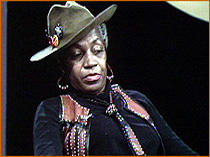
Florynce Kennedy
Florynce Kennedy

Florynce Kennedy, a lawyer born on February 11, 1916, and died on December 22, 2000, was a prominent civil rights lawyer known for her work in the areas of gender equality and LGBTQ+ rights. She was a dedicated civil rights activist committed to eliminating gender discrimination and promoting social justice. more

You May Also Like

“The aggregation of LGBTQ groups offers a response to when small numbers is used as an excuse for an action. however, if research is conducted into the experiences of LGBTQ people, and the number of cases is smaller than anticipated, organizations might also use data to Halt initiatives or cut funding. small numbers therefore presents multiple dangers for the analysis of data about LGBTQ people.”

“Gilborn et al. have described how the provision of too few ethnic categories [too much lumping] produces meaningless results but the provision of too many categories [too much splitting] can be almost as bad. … [with too few people in each category] the school reported no significant difference in attainment between ethnic groups.”

“What is your end goal? The collection and analysis of gender, sex and sexuality data is not an objective in itself, nor is the ambition to gather ‘good data’ or fix the numbers. While paying attention to the potential for methods to misrepresent or exclude, such as strategic essentialism, ensure that data about LGBTQ people is ultimately used to construct a social world that values and improves LGBTQ lives.”

“Do your methods present an authentic account of LGBTQ lives? Rather than adopt methods that promise a tidy dataset, recognize that data about identity characteristics is leaky, pluralistic and can change over time. A queer approach involves the use of innovative collection and analysis methods, such as multiple response options and the provision of open-text boxes, to produce a more authentic reflection of lives and experiences.”

“Grabbing a scarf off the chair, I threw it at him. He caught it, clutching it to his chest as he flew into the air. "You gave Tink a scarf. Tink is free!" He flew out into the hallway like a little cracked-out fairy, screeching, "Tink is freeeeee!" Ren looked at me. "What the actual f**k?" I sighed. "He's obsessed with Harry Potter. I'm sorry." Tink darted back into the room, holding the scarf to his bare chest. "There is no reason to apologize when it comes to Harry Potter." "You do remember what happened to Dobby, right?" I said. "S**t." Tink's eyes widened and he dropped the scarf.”

“Who makes decisions about data that impact LGBTQ people? Decisions that disproportionately affect LGBTQ communities should be made by LGBTQ people. Where this is not practical, or there is a risk of overburdening a small number of people, decision-makers need queer data competence and the ability to recuse themselves when deliberations stretch beyond their capabilities. Use these instances to make space for people with knowledge and experience of the issues under discussion.”