Quotessence
Home / Quotes / Quote by Joyce Carol Oates

Quote by Joyce Carol Oates

“She was gracious if oddly shy with his friends when they came to visit; she listened eagerly as women spoke to her of their pregnancy and childbirth experiences, of which they were happy to speak, and at length; the Playwright heard his wife tell one of these women that her own mother had once told her she'd loved being pregnant, it's the only time a woman truly feels at home in her body, and in the world - "Is that true?" The Playwright hadn't lingered to hear the answer; he wondered what such a revelation meant, for a man. Are we never at home in our bodies? In the world? Except in the act of sexual intercourse, transmitting our seed to the female?”

Quote by Joyce Carol Oates

Book:Blonde

Work

Blonde

Browse quotes and source details for this work. more

Author

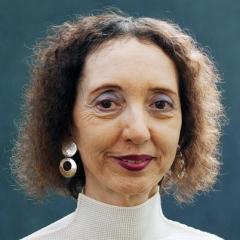
Joyce Carol Oates
Joyce Carol Oates

Joyce Carol Oates is a renowned American author born on June 16, 1938. Her works span various literary forms such as novels, poetry, and drama, known for her unique narrative techniques and profound thematic explorations. more

You May Also Like

“As onerous as certain long-winded tasks are, the key seems to always be the same-- just keep going, just keep going, one foot in front of the other, one bag of garbage filled and out and then the next, one box of important things carefully packed and sealed and then another, more, more, just keep going, one foot in front of the other. And then look what you've got: a new home, a new life, a new play, a production, something you've knitted from fragments of dreams and ideas, something you've woven from yarns and memories, something you've written from yarns and images. One foot more.”

“I want to make buns too!” four-year-old Peter declared firmly. “Then help me knead and roll the dough,” Grandma Iryna suggested, “and I’ll shape and bake all sorts of tasty treats from it.” “Deal!” She lifted her grandson onto a sturdy chair at the edge of the table so he could reach the dough comfortably, then pinched off a small lump for him. “I’ll knead my piece, and you’ll knead yours — together we’ll finish faster,” she said. “Watch me and do the same.” Glancing at his teacher, the boy eagerly began working his dough. Soon he was covered in flour from head to toe. Iryna only smiled and encouraged him, kneading her own dough with skillful hands and humming gentle folk rhymes. — Volodymyr Shablia, Stone. Book One Context note: Set in rural Ukraine before war and repression tear childhood apart, this scene captures a fleeting moment of safety and love — a grandmother teaching her grandson patience, trust, and joy through the simplest ritual of home.”

“Any family could have lived in that room, filling the shelves with bought or borrowed books that eventually overflowed to the short glass coffee table. Porcelain ballerinas and clowns, cartoonish and threatening in their amplified emotions, must have been gifts from doting great-aunts. Three living succulents—I touched them, to check for falsity and perpetual longevity—were equally spaced in front of a thick copy of Elizabeth Bishop’s collected works. My family could not have lived in that room; I could not have lived in that room.”