Quotessence
Home / Quotes / Quote by John Howard Griffin

Quote by John Howard Griffin

“Forgetting myself for a moment, I stopped to study the menu that was elegantly exposed in a show window. I read, realizing that a few days earlier I could have gone in and ordered anything on the menu. But now, though I was the same person with the same appetite, the same appreciation and even the same wallet, no power on earth could get me inside this place for a meal. I recalled hearing some Negro say, “You can live here all your life, but you’ll never get inside one of the great restaurants except as a kitchen boy.” The Negro often dreams of things separated from him only by a door, knowing that he is forever cut off from experiencing them.”

Quote by John Howard Griffin

Work

Black Like Me

Browse quotes and source details for this work. more

Author

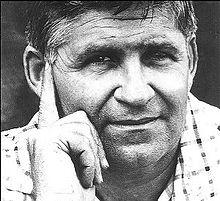
John Howard Griffin
John Howard Griffin

John Howard Griffin was an influential American journalist and writer, best known for his 1961 work 'Black Like Me', which documented his experience of passing as a black man to expose the harsh realities of racial segregation. His work had a profound impact on racial equality and social justice. more

You May Also Like

“The great danger in the South comes precisely from the fact that the public is not informed. Newspapers shirk notoriously their editorial responsibilities and print what they think their readers want. They lean with the prevailing winds and employ every fallacy of logic in order to editorialize harmoniously with popular prejudices. They also keep a close eye on possible economic reprisals from the Councils and the Klans, plus other superpatriotic groups who bring pressure to bear on the newspapers’ advertisers. In addition, most adhere to the long-standing conspiracy of silence about anything remotely favorable to the Negro. His achievements are carefully excluded or, when they demand attention, are handled with the greatest care to avoid the impression that anything good the individual Negro does is typical of his race.”

“In no instance were these reports true or were any of these cities actually in flames. But the result was immediate action on the part of white officials. They got in contact with important community and industrial leaders. Riot control measures were ordered into effect. Civilians armed themselves for the coming attack and stationed themselves at strategic points. In most cases many whites became aware of the “danger” and no local black person had any idea what was going on,”

“when the riot controls had been put into effect, and a nervous white population was waiting, it took little to set it off. In Wichita, a few white youths drove down into the black area and simply fired off guns. This brought black people out of their houses; in rage at seeing the harassment, they hurled stones or sticks at a passing car, and the battle was on. In that particular instance the police arrested the five whites who were armed and twelve young black men who had only rocks and sticks. All were jailed. The next morning, all were released on bail, but the bail set for the five armed whites was only one-fifth the amount set for the twelve unarmed black students.”

“I traveled from city to city in those days, and the view from within the ghettos was terrible and terrifying. While white people in the periphery were arming themselves against the day when they would have to defend themselves from attack by blacks (and really believed someone was fomenting a racial war in which black people would rise up and attack them), black people mostly without arms huddled inside the ghettos feeling that they were surrounded by armed whites.”

“Some whites, who had never really understood, were offended by this sudden death of their role as the “good white leading the poor black out of the jungle.” Many of these were among the saddest people of our time, good-hearted whites who had dedicated themselves to helping black people become imitation whites, to “bringing them up to our level,” without ever realizing what a deep insult this attitude can be.”