Quotessence
Home / Quotes / Quote by Gustave Flaubert

Quote by Gustave Flaubert

“Every time Leon had to tell her everything that he had done since their last meeting. She asked him for some verses - some verses for herself, a "love poem" in honour of her. But he never succeeded in getting a rhyme for the second verse; and at last ended by copying for her a sonnet in a "Keepsake". This was less from vanity than from the one desire of pleasing her. He did not question her ideas; he accepted all her tastes; he was rather becoming her mistress than she his. She had tender words and kisses that thrilled his soul. Where could she have learned this corruption almost incorporeal in the strength of its profundity and dissimulation?”

Quote by Gustave Flaubert

Work

madame bovary

Gustave Flaubert's Madame Bovary is a seminal work of 19th-century French literature. The novel follows the life of Emma Bovary, a woman who is discontent with her provincial life and marries Charles Bovary, a dull and unambitious country doctor. Emma's dissatisfaction leads her to seek fulfillment through romantic escapades and extramarital affairs, ultimately leading to disaster. Flaubert's meticulous attention to detail and his exploration of themes such as social class, materialism, and the human condition have made this novel a classic of world literature. more

Author

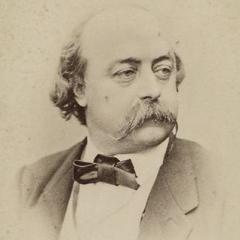
Gustave Flaubert
Gustave Flaubert

Gustave Flaubert, born on December 12, 1821 and died on May 8, 1880, was a prominent French writer of the 19th century. Known for his exquisite literary skills and profound psychological portrayals, Flaubert is best remembered for his masterpiece 'Madame Bovary'. more

You May Also Like

“Había un no sé qué de vertiginoso que Emma sentía llegar hasta sí, como una emanación de aquellas vidas amontonadas, y su corazón se henchía profundamente al percibirlo. Era como si las ciento veinte mil almas que allí palpitaban le estuvieran enviando al unísono el vaho de aquellas pasiones que ella les atribuía. Su amor ensanchaba a la vista de aquel espacio y se llenaba con el rumoreo de confusos murmullos que subían hasta ella. Proyectaba su amor hacia fuera, hacia las plazas, los paseos y las calles, y la antigua villa normanda le antojaba una capital desmesurada, una especie de Babilonia por cuyas puertas estaba entrando. Se apoyaba con las dos manos en el borde de la ventanilla y se inclinaba hacia afuera para aspirar la brisa, mientras los tres caballos seguían su galope.”

“Without knowing why or how, I found myself in love with this strange Wanderess. Maybe I was just in love with the dream she was selling me: a life of destiny and fate; as my own life up until we met had been so void of enchantment. Those things: mystery, fate, enchantment... they are things that young people offer us as soon as we get close to them. And if we're not careful, we can be seduced by, and drawn back into, the youthful world they preside over.”

“It was the French of the Normans that, grafting itself onto the barbaric Saxon tongue, gave it its most magnificent blossoming. And, in these new countries, where both English and French are intertwined again, it is as if English were bathing itself in the fountain of its own youth, and as if French were remembering the buried treasures it had thought forgotten.”

“If your taste, and therefore the taste buds of your soul, have grown accustomed to the flavor of bitterness—and consuming it to the last drop, your playful spirit has run completely dry—do this, and you’ll discover the highly sought but rarely found fountain of youth. Push far out from the populated shore, then stretch out over the side of your canoe, and peer down into the deep deep waters. When the shark begins to emerge within your reflection, don’t be afraid, let it completely devour your big head, as you have also taught the beast to consume others. Fear not! You will no longer need it on your odyssey. The humiliating disfiguration will kill you but it won’t hurt you. Rather, it will make space for your heart to turtlehead as an old, wise, and happy sage with an insatiable thirst for the drunkenness of good spirits, that can be found in every home, temple, and tavern that litters the shore, and brings cheer and love of life to the rigid bitter bones.”

“Kamimura has been whispering all week of a sacred twenty-four-hour ramen spot located on a two-lane highway in Kurume where truckers go for the taste of true ramen. The shop is massive by ramen standards, big enough to fit a few trucks along with those drivers, and in the midafternoon a loose assortment of castaways and road warriors sit slurping their noodles. Near the entrance a thick, sweaty cauldron boils so aggressively that a haze of pork fat hangs over the kitchen like waterfall mist. While few are audacious enough to claim ramen is healthy, tonkotsu enthusiasts love to point out that the collagen in pork bones is great for the skin. "Look at their faces!" says Kamimura. "They're almost seventy years old and not a wrinkle! That's the collagen. Where there is tonkotsu, there is rarely a wrinkle." He's right: the woman wears a faded purple bandana and sad, sunken eyes, but even then she doesn't look a day over fifty. She's stirring a massive cauldron of broth, and I ask her how long it's been simmering for. "Sixty years," she says flatly. This isn't hyperbole, not exactly. Kurume treats tonkotsu like a French country baker treats a sourdough starter- feeding it, regenerating, keeping some small fraction of the original soup alive in perpetuity. Old bones out, new bones in, but the base never changes. The mother of all ramen. Maruboshi Ramen opened in 1958, and you can taste every one of those years in the simple bowl they serve. There is no fancy tare, no double broth, no secret spice or unexpected toppings: just pork bones, noodles, and three generations of constant simmering. The flavor is pig in its purest form, a milky broth with no aromatics or condiments to mitigate the purity of its porcine essence.”