Quotessence
Home / Quotes / Quote by Paul Bloom

Quote by Paul Bloom

Work

Psych: The Story of the Human Mind

Browse quotes and source details for this work. more

Author
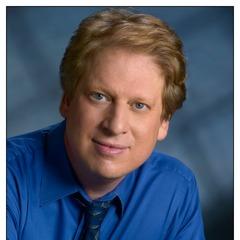
Paul Bloom
Paul Bloom

Paul Bloom is a renowned cognitive psychologist, born on December 24, 1963. He is a professor at Yale University, where he studies human thinking, decision-making, and judgment. Bloom's research spans multiple areas, including intuition, intuitive thinking, cognitive biases, and moral judgment. more

You May Also Like

“The UFO abduction syndrom portrays, it seems to me, a banal Universe. The form of the supposed aliens is marked by a failure of the imagination and a preoccupation with human concerns. Not a single being presented in all these accounts is as astonishing as a cockatoo would be if you had never before beheld a bird.”

“When you let go of control and commit yourself to happiness, it is so easy to offer compassion and forgiveness. This propels you from the past, into the present. People that are negative, spend so much time trying to control situations and blame others for their problems. Committing yourself to staying positive is a daily mantra that states, “I have control over how I plan to react, feel, think and believe in the present. No one guides the tone of my life, except me!”

“With self-awareness, a basic definition tells us, “You know what you are feeling and why—and how it helps or hurts what you are trying to do.” Other key points: you can align your self-image on how others see you; you have an accurate sense of your limits and strengths, and so a more realistic self-confidence; you are clear about your sense of purpose and values, which helps you be more decisive. Cognitive scientists call this self-reflexive attention “meta-awareness.” We can watch our thoughts and feelings as they come and go, and know where our attention focuses—and change that focus if we want. This deliberate control of the beam of our attention is a mental skill. Think of our mind as a sort of gym, a place where we can practice in ways that will bulk up our mental capacities. The research on flow, you may recall, revealed that the person’s focus while in flow was 100 percent. They were one-pointed, fully present to the moment. Such absorption indicates meta-awareness, that ability to monitor and manage your own focus. But we don’t need that diamond-like beam of focus all the time: a stronger muscle for attention boosts the odds that we can get into an optimal state. Focus—paying attention where and when we want to—has endless uses. Deliberate concentration on whatever may be important to us at the moment lets us do our best; being distracted worsens our effort. Having control of our attention is for the mind what cardiovascular fitness is for the body; just as a fit heart enhances any physical task, full focus enhances whatever we do.”