“And if I am not mistaken here is the secret of the greatness that was Spain. In Spain it is men that are the poems, the pictures and the buildings. Men are its philosophies. They lived, these Spaniards of the Golden Age; they felt and did; they did not think. Life was what they sought and found, life in its turmoil, its fervour and its variety. Passion was the seed that brought them forth and passion was the flower they bore. But passion alone cannot give rise to a great art. In the arts the Spaniards invented nothing. They did little in any of those they practised, but give a local colour to a virtuosity they borrowed from abroad. Their literature, as I have ventured to remark, was not of the highest rank; they were taught to paint by foreign masters, but, inapt pupils, gave birth to one painter only of the very first class; they owed their architecture to the Moors, the French and the Italians, and the works themselves produced were best when they departed least from their patterns. Their preeminence was great, but it lay in another direction: it was a preeminence of character. In this I think they have been surpassed by none and equalled only by the ancient Romans. It looks as though all the energy, all the originality, of this vigorous race had been disposed to one end and one end only, the creation of man. It is not in art that they excelled, they excelled in what is greater than art--in man. But it is thought that has the last word.”
Quote by W. Somerset Maugham
Book:Don Fernando
Work
Don Fernando
Browse quotes and source details for this work. more
Author
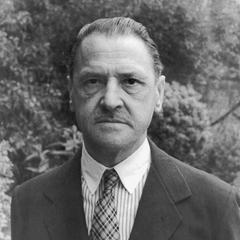
W. Somerset Maugham
W. Somerset Maugham was a British playwright known for his sharp wit and insightful portrayal of human nature. Born on January 25, 1874, and passing away on December 16, 1965, Maugham's plays often delved into the complexities of human relationships and the social dynamics of his era. more
You May Also Like
“Watu wakikuonyesha tabia zao za ndani kabisa waamini. Wanajijua vizuri zaidi, kuliko unavyowajua.”
“He who says that someone isn’t himself is a victim of statistics.”
“Hope is a fruit of proven character.”
Source: Love and War: Finding the Marriage You've Dreamed Of
“If you want to become successful, then first become the person who can be successful.”
Source: Go For Success: Be a Champion by 6 Effective Steps
“There is nothing in which people more betray their character than in what they find to laugh at.”
Source: Elective Affinities
Source: The Moons of August
Source: Moonwalking with Einstein: The Art and Science of Remembering Everything