Quotessence
Home / Quotes / Quote by Erin Morgenstern

Quote by Erin Morgenstern

“I would dearly love to read the reactions, the observations of each and every person who walks through the gates of Le Cirque des Reves, to know what they see and hear and feel. To see how their experience overlaps with my own and how it differs. I have been fortunate letters with such information, to have reveurs share with me writings from journals or thoughts scribbled on scraps of paper. We add our own stories, each visitor, each visit each night spent at the circus. I suppose there will never be a lack of things to say, of stories to be told and shared. -Friedrick Thiessen, 1895”

Quote by Erin Morgenstern

Work

The Night Circus

In "The Night Circus," a young girl named Celia discovers a hidden world of magic and mystery within a traveling circus. The story follows her and her rival, Marco, as they compete in a magical duel that spans years and tests their abilities. The circus itself is a marvel, filled with enchanting performances and a sense of wonder that captivates all who enter. The novel explores themes of love, ambition, and the power of magic, creating a captivating and enchanting tale. more

Author

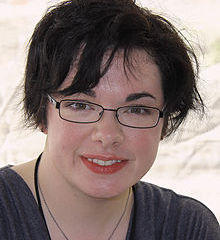
Erin Morgenstern
Erin Morgenstern

Erin Morgenstern is an American author born on July 8, 1978. Her works are known for their fantasy elements and literary quality, with her most famous novel being 'The Night Circus'. Her writing is poetic and skilled at creating imaginative story worlds. more

You May Also Like

“Street food, she saw. Silky pasta, doughy pizza, steaming pho, obnoxiously tall burgers. Benches had been nestled behind the Royal Festival Hall, and they were filled with people eating personal feasts from paper plates: vast thalis; racks of sticky, black ribs; half lobsters with melting garlic butter and bread. Rows of diners craning to read menus wound between food trucks; queues intermingled, new arrivals negotiating for space. Piglet looked around, the National behind her. She had left the office early, she reasoned; she had time before finding a place to work. She edged forward, walking among the tables. The benches were full, some having to stand, juggling their fried chicken with their phones. There were young men who talked too loudly, laughed with their mouths full, and wore round, tortoiseshell glasses; glamorous women in their fifties and sixties, lunching and drinking; and au pairs with charges no older than twelve who ate salt beef bagels, cacio e pepe, and laksa.”

“A depachika is like nothing else. It is the endless bounty of a hawker's bazaar, but with Japanese civility. It is Japanese food and foreign food, sweet and savory. The best depachika have more than a hundred specialized stands and cannot be understood on a single visit. I felt as though I had a handle on Life Supermarket the first time I shopped there, but I never felt entirely comfortable in a depachika. They are the food equivalent of Borges's "The Library of Babel": if it's edible, someone is probably selling it, but how do you find it? How do you resist the cakes and spices and Chinese delis and bento boxes you'll pass on the way? At the Isetan depachika, in Shinjuku, French pastry god Pierre Hermé sells his signature cakes and macarons. Not to be outdone, Franco-Japanese pastry god Sadaharu Aoki sells his own nearby. Tokyo is the best place in the world to eat French pastry. The quality and selection are as good as or better than in Paris, and the snootiness factor is zero. I wandered by a collection of things on sticks: yakitori at one stand, kushiage at another. Kushiage are panko-breaded and fried foods on sticks. At any depachika, you can buy kushiage either golden and cooked, or pale and raw to fry at home. Neither option is terribly appetizing: the fried stuff is losing crispness by the second, and who wants to deep-fry in a poorly ventilated Tokyo apartment in the summer? But the overall effect of the display is mesmerizing: look at all the different foods they've put on sticks! Pork, peppers, mushrooms, squash, taro, and two dozen other little cubes.”

“They were all there for the food, the drink, and the ambience, even as everyone devoured plates as disparate as Korean bibimbap and French vichyssoise. "I'm going over there." Ana pointed to a midnight-blue food truck that was known for having the best bao, steamed Vietnamese buns, in Denver. Which, given the popularity of the southeast Asian cuisine in the city lately, was more of an accomplishment than it might have seemed. "What about you?" Rachel asked Melody. "I'm having what you're having. You never steer me wrong." "Then A Parisian in Denver is the way to go. Come on. I want to say hello to Lilia." They found their way to the end of the line in front of a food truck painted in red, blue, and white, and Rachel craned her neck to feet a better look at the chalkboard that proclaimed the day's specials. There was French street food like crepes and merguez sausages alongside trendy favorites like duck confit pommes frites.”

“The familiar cooking warmth coming from the booths soothed my anxious thoughts, like entering a labyrinth of barbecued, breaded, deep-fried treats. Acarajé bursting with shrimp. Grilled fish covered in lime juice and raw onion rings. Coxinhas loaded with shredded chicken and potato. Pastéis heavy with extra minced meat and olives. Coconut and cheese tapioca. Crepe sticks, too, prepared on demand right before the customers' eyes, the batter cooked like a waffle and filled with chocolate and doce de leite.”

“Scarily, cadmium is not even the worst poison among the elements. It sits above mercury, a neurotoxin. And to the right of mercury sit the most horrific mug shots on the periodic table—thallium, lead, and polonium—the nucleus of poisoner’s corridor.”

“Grandma, he had often wanted to say, Is this where the world began? For surely it had begun in no other than a place like this. The kitchen, without doubt, was the center of creation, all things revolved about it; it was the pediment that sustained the temple. Eyes shut to let his nose wander, he snuffed deeply. He moved in the hell-fire steams and sudden baking-powder flurries of snow in this miraculous climate where Grandma, with the look of the Indies in her eyes and the flesh of two warm hens in her bodice, Grandma of the thousand arms, shook, basted, whipped, beat, minced, diced, peeled, wrapped, salted, stirred. Blind, he touched his way to the pantry door. A squeal of laughter rang from the parlor, teacups tinkled. But he moved on into the cool underwater green and wild-persimmon country where the slung and hanging odor of creamy bananas ripened silently and bumped his head. Gnats fizzed angrily about vinegar cruets and his ears. He opened his eyes. He saw bread waiting to be cut into slices of warm summer cloud, doughnuts strewn like clown hoops from some edible game. The faucets turned on and off in his cheeks. Here on the plum-shadowed side of the house with maple leaves making a creek-water running in the hot wind at the window he read spice-cabinet names.”