Quotessence
Home / Quotes / Quote by Rainer Maria Rilke

Quote by Rainer Maria Rilke

Author

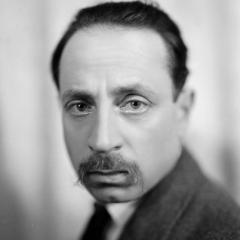
Rainer Maria Rilke
Rainer Maria Rilke

German poet known for his profound poetry and epistolary works. Rainer Maria Rilke's poetry style is unique, often exploring themes such as loneliness, love, and religious faith. more

You May Also Like

“Another big group of dolphins had just surfaced alongside our moving vessel—leaping and splashing and calling mysteriously back and forth in their squeally, whistly way, with many babies swift alongside their mothers. And this time, confined to just the surface of such deep and lovely lives, I was becoming unsatisfied. I wanted to know what they were experiencing, and why to us they feel so compelling, and so—close. This time I allowed myself to ask them the question that was forbidden fruit: Who are you? Science usually steers firmly from questions about the inner lives of animals. Surely they have inner lives of some sort. But like a child who is admonished that what they really want to ask is impolite, a young scientist is taught that the animal mind—if there is such—is unknowable. Permissible questions are “it” questions: where it lives; what it eats; what it does when danger threatens; how it breeds. But always forbidden—always forbidden—is the one question that might open the door: “Who?” — Carl Safina”

“Philosophers in the scholastic tradition have usually defined intellectual certitude as a proposition in which we have no reasonable 'fear' of the opposite proposition turning out to be the truth. But this "fear" of which the medieval scholastics spoke does not convey their teaching to a mind trained in the proper formalities of the English language. A lack of fear, in this context, means that we cannot judge the opposite to be possible and that we are fully conscious of the reasons why we cannot. We have no reason permitting us to withhold assent to the proposition at hand. "lack of fear, " in this context, is something intellectual; it is not really a "lack of fear," in the emotional sense at all, and "fear" —in English - connotes the emotional. A man can possess intellectual certitude about a proposition and still fail to possess subjective or emotional certitude. He can emotionally fear the opposite, even though he cannot think the opposite to be a possibility. A man ca be absolutely certain that a God exists and still feel His absence. pg 172”