Quotessence
Home / Quotes / Quote by Judith Lewis Herman

Quote by Judith Lewis Herman

“when traumatic events are of human design, those who bear witness are caught in the conflict between victim and perpetrator. All the perpetrator asks is that the bystander do nothing. He appeals to the universal desire to see, hear, and speak no evil. The victim, on the contrary, asks the bystander to share the burden of pain. The victim demands action, engagement and remembering.”

Quote by Judith Lewis Herman

Work

Author

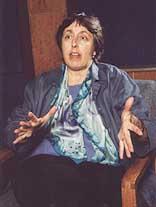
Judith Lewis Herman
Judith Lewis Herman

Judith Lewis Herman is an American author renowned for her work in the field of psychological trauma. Her writings delve deeply into the impact of post-traumatic stress disorder (PTSD) and the effects of traumatic experiences on individuals and society. more

You May Also Like

“By definition, a human being is endowed with free will. He can use this to choose between good and evil. If he can only perform good or only perform evil, then he is a clockwork orange - meaning that he has the appearance of an organism lovely with colour and juice but is in fact only a clockwork toy to be wound up by God or the Devil or (since this is increasingly replacing both) the Almighty State. It is as inhuman to be totally good as it is to be totally evil. The important thing is moral choice. Evil has to exist along with good in order that moral choice may operate. Life is sustained by the grinding opposition of moral entities. This is what the television news is all about. Unfortunately there is so much original sin in us all that we find evil rather attractive. To devastate is easier and more spectacular than to create.”

“Ay, that I had not done a thousand more. Even now I curse the day—and yet, I think, Few come within the compass of my curse,— Wherein I did not some notorious ill, As kill a man, or else devise his death, Ravish a maid, or plot the way to do it, Accuse some innocent and forswear myself, Set deadly enmity between two friends, Make poor men's cattle break their necks; Set fire on barns and hay-stacks in the night, And bid the owners quench them with their tears. Oft have I digg'd up dead men from their graves, And set them upright at their dear friends' doors, Even when their sorrows almost were forgot; And on their skins, as on the bark of trees, Have with my knife carved in Roman letters, 'Let not your sorrow die, though I am dead.' Tut, I have done a thousand dreadful things As willingly as one would kill a fly, And nothing grieves me heartily indeed But that I cannot do ten thousand more.”

“Throughout the world what remains of the vast public spaces are now only the stuff of legends: Robin Hood’s forest, the Great Plains of the Amerindians, the steppes of the nomadic tribes, and so forth… Rousseau said that the first person who wanted a piece of nature as his or her own exclusive possession and transformed it into the transcendent form of private property was the one who invented evil. Good, on the contrary, is what is common.”

“The symbol of a drama, a symphony, or a dance is useful to correct a certain absurdity which may arise if we talk too much of God planning and creating the world for good and then being frustrated by the free will of the creatures. This may raise the ridiculous idea that the Fall to God by surprise and upset His plan, or else – more ridiculous still – that God planned the whole thing for conditions which, He well knew, were never going to be realized. In fact, of course, God saw the crucifixion in the act of creating the first nebulae. The world is a dance in which good, descending from God, is disturbed by evil arising from the creatures, and the resulting conflict is resolved by God's own assumption of the suffering nature which evil produces.”

“When you give your mind, body, and heart the message that you are worth the effort of being conscious, miraculous things start to happen.”