Quotessence
Home / Quotes / Quote by Bruno Schulz

Quote by Bruno Schulz

“They do not discover anything new after that, they only learn how to understand better and better the secret entrusted to them at the outset; their creative effort goes into an unending exegesis, a commentary on that one couplet of poetry assigned to them.”

Quote by Bruno Schulz

Author
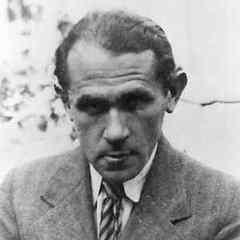
Bruno Schulz
Bruno Schulz

Bruno Schulz was a Polish writer born on July 12, 1892, and died on November 19, 1942. Known for his unique narrative style and profound philosophical insights, Schulz's work blends elements of surrealism and magical realism. more

You May Also Like

“100% of a Guru’s marketing plan depends on you holding the belief that you are not enough; that you were created less equipped than necessary to fulfill your purpose. What if you let go of that belief and connected with the truth of your innate power to change and shape your life? You ARE enough. You CAN change and shape your own life. Anyone who tells you different is simply lying. Your life has immeasurable potentiality for greatness; act accordingly.”

“Rushing outside, she carries long, sharp scissors and snips at flower petals while screaming, "Off with your head!" When I realize what she's really after, a strange discomfort stirs inside. I've seen how the petals tatter beneath the blades. I don't want her to ruin my moth's pretty wings. I throw my hands over the scissors to stop her. The moth escapes unscathed. But I'm not so lucky... Coming out of the trance, I drop to the ground and clutch aching palms to my chest. The scars throb as if freshly cut. Morpheus bows over me, smoothing my hair. "I told you that you were special, Alyssa," he murmurs, the weight of his palm strangely comforting on the top of my head. "No one else has ever bled for me. The loyalty of one child for another is immeasurable. You believed in me, shared new experiences with me, grew with me. That has earned you my sincerest devotion."”

“Yo creía que el alma me había sido dada para gozar de las bellezas del mundo, la luz de la luna sobre la anaranjada cresta de una nube, y la gota de rocío temblando encima de una rosa. Mas, cuando fui pequeño creí siempre que la vida reservaba para mí un acontecimiento sublime y hermoso. Pero a medida que examinaba la vida de los otros hombres, descubrí que vivían aburridos, como si habitaran en un país siempre lluvioso, donde los rayos de la lluvia les dejaran en el fondo de las pupilas tabiques de agua que les deformaban la visión de las cosas. Y comprendí que las almas se movían como los peces prisioneros en un acuario. Al otro lado de los verdinosos muros de vidrio estaba la hermosa vida cantante y altísima, donde todo sería distinto, fuerte y múltiple, y donde los seres nuevos de una creación más perfecta, con sus bellos cuerpos saltarían en una atmósfera elástica- Es inútil, tengo que escaparme de la tierra.”

“In our folk nobody has any experience of youth, there’s barely even any time for being a toddler. The children simply don’t have any time in which they might be children........Indeed... there’s simply no way that we would be able to provide our children with a viable childhood, one that is real. Naturally, there are consequences. There’s a certain ever present, not to be liquidated childishness that permeates our folk; We often act in ways that are totally and utterly ridiculous and, indeed, precisely like children we do things that are crazy, letting loose with our assets in a manner that is bereft of all rationality, prodigious in our celebrations, partaking in a light-headed frivolousness that is divorced from all sensibility, and often enough all simply for the sake of some small token of fun, so much do we love having our small amusements. But our folk isn’t only childish, to a certain extent we also age prematurely, childhood and old age mix themselves differently with us than by others. We don’t have any youth, we jump right away into maturity and, then, we remain grown-ups for too long and as a consequence to this there’s a broad shadow of a certain tiredness and a sort of hopelessness that colours our essential nature, a nature that as a whole is otherwise so tenacious and permeated by hope, strong hope. This, no doubt, this is related to why we’re so disinclined toward music—we’re too old for music, so much excitement, so much passion doesn’t sit well with our heaviness;”