Quotessence
Home / Quotes / Quote by Aldous Huxley

Quote by Aldous Huxley

“But if one doesn't really exist, one wonders why..." she hesitated. "Why one makes such a fuss about things," Anthony suggested. "All that howling and hurrahing and gnashing of teeth. About the adventures of a self that isn't really a self—just the result of a lot of accidents. And of course," he went on, "once you start wondering, you see at once that there is no reason for making such a fuss. And then you don't make a fuss—that is, if you're sensible. Like me," he added, smiling.”

Quote by Aldous Huxley

Work

Eyeless In Gaza

This book is a fictional account of life in the Gaza Strip during the 1970s, focusing on the struggles and resilience of its inhabitants amidst the backdrop of war and conflict. more

Author

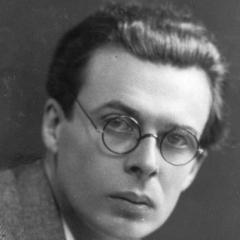
Aldous Huxley
Aldous Huxley

Aldous Huxley was an English writer and philosopher, renowned for his dystopian novel 'Brave New World'. Born on July 26, 1894, in Godalming, Surrey, England, he was the younger brother of the poet and critic Leonard Huxley. Huxley's works frequently delved into the interplay of science, politics, and philosophy, and he was a prominent figure in the literary movement known as the 'Lost Generation'. He passed away on November 22, 1963. more

You May Also Like

“On the morning of November 22nd, a Friday, it became clear the gap between living and dying was closing. Realizing that Aldous [Huxley] might not survive the day, Laura [Huxley's wife] sent a telegram to his son, Matthew, urging him to come at once. At ten in the morning, an almost inaudible Aldous asked for paper and scribbled "If I go" and then some directions about his will. It was his first admission that he might die ... Around noon he asked for a pad of paper and scribbled LSD-try it intermuscular 100mm In a letter circulated to Aldous's friends, Laura Huxley described what followed: 'You know very well the uneasiness in the medical mind about this drug. But no 'authority', not even an army of authorities, could have stopped me then. I went into Aldous's room with the vial of LSD and prepared a syringe. The doctor asked me if I wanted him to give the shot- maybe because he saw that my hands were trembling. His asking me that made me conscious of my hands, and I said, 'No, I must do this.' An hour later she gave Huxley a second 100mm. Then she began to talk, bending close to his ear, whispering, 'light and free you let go, darling; forward and up. You are going forward and up; you are going toward the light. Willingly and consciously you are going, willingly and consciously, and you are doing this beautifully — you are going toward the light — you are going toward a greater love … You are going toward Maria's [Huxley's first wife, who had died many years earlier] love with my love. You are going toward a greater love than you have ever known. You are going toward the best, the greatest love, and it is easy, it is so easy, and you are doing it so beautifully.' All struggle ceased. The breathing became slower and slower and slower until, 'like a piece of music just finishing so gently in sempre piu piano, dolcamente,' at twenty past five in the afternoon, Aldous Huxley died.”

“Успокойтесь, вы с ним оба - страстные натуры, вам совершенно недоступны умеренные широты, а только на них человек еще сохраняет шансы продлить свое счастье. У него - экстремизм души и идей, у вас - экстремизм сердца и чувств... Очень скверно! Страсти, как сердечные, так и идейные, в конечном счете превращают мир в джунгли. Вспомните эти строчки из Уильяма Блейка: "Tiger, tiger, burning bright, in the forests of the night..." ["Тигр, тигр, пылающий ярко в ночном лесу..." (англ.)] Я не знаю более яркого и точного образа страсти...”

“…el laberíntico mundo del doblepiensa. Saber y no saber, tener plena conciencia de algo que sabes que es verdad y al mismo tiempo contar mentiras cuidadosamente elaboradas, mantener a la vez dos opiniones sabiendo que son contradictorias y creer en ambas, utilizar la lógica en contra de la lógica, repudiar la moralidad en nombre de la moralidad misma, creer que la democracia era imposible y que el partido era el garante de la democracia, olvidar lo que hacía falta olvidar y luego recordarlo cuando hacía falta, para luego olvidarlo otra vez. Y, por encima de todo, aplicar ese mismo proceso al propio proceso. Esa era la mayor sutileza: inducir conscientemente a la inconsciencia, y luego, una vez más, volverse inconsciente del acto de hipnosis que acabas de realizar. Incluso la comprensión del término doblepiensa implicaba el uso del doblepiensa (Cap 3, primera parte - 1984)”