Quotessence
Home / Quotes / Quote by Christopher Wren

Quote by Christopher Wren

“Si monumentum requiris circumspice (If you seek his monument, look around.) [Epitaph on Wren's tomb in St. Paul's Cathedral]”

Quote by Christopher Wren

Author
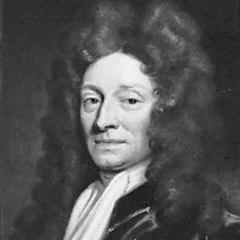
Christopher Wren
Christopher Wren

Christopher Wren was an English architect renowned for his significant contributions to the reconstruction of London. Born on October 20, 1632, and passing away on February 25, 1723, Wren's architectural style had a profound impact on future generations. His most famous work, St. Paul's Cathedral, exemplifies his influence on architectural design. more

You May Also Like

“St Paul's cathedral stands like a cornered beast on Ludgate hill, taking deep breaths above the smoke.  The fire has made terrifying progress in the night and is closing in on the ancient monument from three directions.  Built of massive stones, the cathedral is held to be invincible, but suddenly Pegge sees what the flames covet: the two hundred and fifty feet of scaffolding erected around the broken tower.  Once the flames have a foothold on the wooden scaffolds,, they can jump to the lead roof, and once the timbers burn and the vaulting cracks, the cathedral will be toppled by its own mass, a royal bear brought down by common dogs.”

“Pause, reflect, admire, take heed of your ways—so these ancient tablets are always advising and exhorting us. One leaves the church marveling at the spacious days when unknown citizens could occupy so much room with their bones and confidently request so much attention for their virtues when we—behold how we jostle and skip and circumvent each other in the street, how sharply we cut corners, how nimbly we skip beneath motor cars. The mere process of keeping alive needs all our energy. We have no time, we were about to say, to think about life or death either, when suddenly we run against the enormous walls of St. Paul’s.”

“There is no river in the world to be compared for majesty and the witchery of association, to the Thames; it impresses even the unreading and unimaginative watcher with a solemnity which he cannot account for, as it rolls under his feet and swirls past the buttresses of its many bridges; he may think, as he experiences the unusual effect, that it is the multiplicity of buildings which line its banks, or the crowd of sea-craft which floats upon its surface, or its own extensive spread. In reality he feels, although he cannot explain it, the countless memories which hang for ever like a spiritual fog over its rushing current. ("The Phantom Model")”

“The Thames here had a vastly different character to the wide, muddy tyrant that seethed through London. It was graceful and deft and remarkably light of heart. It skipped over stones and skimmed its banks, water so clear that one could see the reeds swaying deep down on her narrow bed. The river here was a she, he'd decided. For all its sunlit transparency, there were certain spots in which it was suddenly unfathomable.”