Quotessence
Home / Quotes / Quote by Juan Rulfo

Quote by Juan Rulfo

“The sparrows would laugh, pecking at the leaves that the wind pushed to the ground, then they would laugh again. They would abandon feathers among the thorny branches and chase after butterflies and laugh some more. It was that time of year.”

Quote by Juan Rulfo

Work

Pedro Páramo

Browse quotes and source details for this work. more

Author

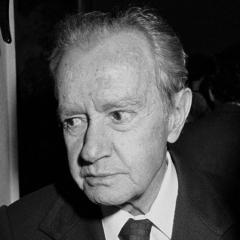
Juan Rulfo
Juan Rulfo

Juan Rulfo was a Mexican writer known for his concise and profound literary style. His works, often set in the Mexican countryside, delve into the complexities of human nature, society, and culture. more

You May Also Like

“Beatitude begins at the moment thought-feeling has gone beyond the author’s need to think — he doesn’t need to think anymore and he now finds himself close to the grandeur of nothingness. One could also say of “everything”. But “everything” is quantity, and quantity has limits at its very outset. True incommensurability is nothingness, which has no barriers and is where a person can spread out her thought-feeling.”

“Is it not strange how such things can happen, momentous things, things that seem to change the world itself and yet they do not? The river flows, the sun shines, the birds sing. Nature is indifferent to man. Which is perhaps why we can find in it a source of healing. We may be wounded, but it is not. Despite our weariness, it renews itself continually. I find that thought comforting.”

“Those who have made architectural beauty their life's work know only too well how futile their efforts can prove. After an exhaustive study of the buildings of Venice, in a moment of depressive lucidity, John Ruskin acknowledged that few Venetians in fact seemed elevated by their city, perhaps the most beautiful urban tapestry in the world. Endowed with a power that is often as unreliable as it is inexpressible, architecture will always compere poorly with utilitarian demands for humanity's resources. How hard is it to make a case for the cost of tearing down and rebuilding a mean but serviceable street. How awkward to have to defend, in the face of more tangible needs, the benefits of re-aligning a crooked lamppost or replacing an ill-matched window frame. Beautiful architecture has none of the unambiguous advantages of a vaccine or a bowl of rice. In construction will hence never be raised to a dominant political priority, for even if the whole man-made world could, through relentless effort and sacrifice, be modeled to rival St Mark's square ...[ ..] , we would still often be in a bad mood.”