“In his 2001 book, Economics as Religion, economist Robert Nelson recounted the ways in which economics came to operate in society with its own religion-like structure. Nelson argues that modern economics has operated in many ways as a secularized version of Protestant theology in which the primary evil is economics scarcity and in which deliverance from this evil (and the attainment of heaven on earth) will come through application of economic science to promote efficiency (and fairness) in production and distribution. In this worldview, economists, as technical advisors to governmental managers, serve as a new “scientific” priesthood effecting a secular salvation of human society through the application of constructivist reason, the sort of reasoning that seeks to deliberately design choices and institutions to generate what are perceived as “optimal” outcomes. Here, then, within the very discipline to which Vernon Smith has devoted his life’s work, there seems to be a persistent tendency if not to outright materialism then to a reduction of human rationality within constructivist constraints. As Smith acknowledges, “predominantly, both economists and psychologists are reluctant to allow that naive and unsophisticated agents can achieve socially optimal ends without a comprehensive understanding of the whole, as well as their individual parts, implemented by deliberate action. There is no magic.”
Quote by Vernon L. Smith
Work
The Evidence of Things Not Seen: Reflections on Faith, Science, and Economics
Browse quotes and source details for this work. more
Author
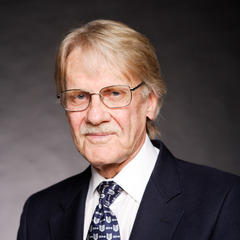
Vernon L. Smith
Vernon L. Smith is an esteemed economist renowned for his pioneering work in experimental economics. Born on January 1, 1927, he has received numerous honors throughout his career, including the Nobel Prize in Economics in 1991. more
You May Also Like
Source: The Evidence of Things Not Seen: Reflections on Faith, Science, and Economics
Source: Los pensadores de la libertad
Source: Hopes and Prospects
“When everything looks like a magical oil painting, you know you are in Autumn!”