“Another sort of landscape poetry is to be found in Wordsworth, for whom the title of poet of nature might perhaps be claimed. To him the landscape is an influence. What he renders, beyond such pictorial touches as language is capable of, is the moral inspiration which the scene brings to him. This moral inspiration is not drawn at all from the real processes of nature which every landscape manifests in some aspect and for one moment. Such would have been the method of Lucretius; he would have passed imaginatively from the landscape to the sources of the landscape; he would have disclosed the poetry of matter, not of spirit. Wordsworth, on the contrary, dwells on adventitious human matters. He is no poet of genesis, evolution, and natural force in its myriad manifestations. Only a part of the cosmic process engages his interest, or touches his soul—the strengthening or chastening of human purposes by the influences of landscape. These influences are very real; for as food or wine keeps the animal heart beating, or quickens it, so large spaces of calm sky, or mountains, or dells, or solitary stretches of water, expand the breast, disperse the obsessions that cramp a man’s daily existence, and even if he be less contemplative and less virtuous than Wordsworth, make him, for the moment, a friend to all things, and a friend to himself. Yet these influences are vague and for the most part fleeting. Wordsworth would hardly have felt them so distinctly and so constantly had he not found a further link to bind landscape to moral sentiment. Such a link exists. The landscape is the scene of human life. Every spot, every season, is associated with the sort of existence which falls to men in that environment. Landscape for Wordsworth’s age and in his country was seldom without figures. At least, some visible trace of man guided the poet and set the key for his moral meditation. Country life was no less dear to Wordsworth than landscape was; it fitted into every picture; and while the march of things, as Lucretius conceived it, was not present to Wordsworth’s imagination, the revolutions of society—the French Revolution, for instance—were constantly in his thoughts. In so far as he was a poet of human life, Wordsworth was truly a poet of nature. In so far, however, as he was a poet of landscape, he was still fundamentally a poet of human life, or merely of his personal experience. When he talked of nature he was generally moralizing, and altogether subject to the pathetic fallacy; but when he talked of man, or of himself, he was unfolding a part of nature, the upright human heart, and studying it in its truth.”
Quote by George Santayana
Work
Three Philosophical Poets: Lucretius, Dante And Goethe
Browse quotes and source details for this work. more
Author
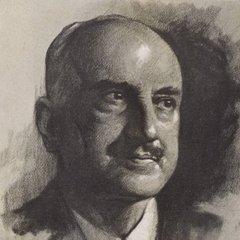
George Santayana
George Santayana was an American philosopher, essayist, and critic renowned for his unique philosophical thoughts and profound insights into culture, art, and science. His philosophy emphasizes individualism, naturalism, and pragmatism, and his works have had a profound impact on 20th-century philosophy and culture. more
You May Also Like
Source: The Beasts of Success
Source: Inara
“And the main thing in life, my dear Harold, is not to be afraid to be human.”
Source: Harold and Maude
“We are not people, but vessels of possibility.”
Source: Himalayan Sonneteer: 100 Sonnets of Unsubmission
Source: Rights of Man
“Looking for the good in people is how I discovered the worse.”
Source: Exit West