Quotessence
Home / Quotes / Quote by Ernesto Sabato

Quote by Ernesto Sabato

“He pasado tres días extraños: el mar, la playa, los caminos me fueron trayendo recuerdos de otros tiempos. No sólo imágenes: también voces, gritos y largos silencios de otros días. Es curioso, pero vivir consiste en construir futuros recuerdos; ahora mismo, aquí frente al mar, sé que estoy preparando recuerdos minuciosos, que alguna vez me traerán la melancolía y la desesperanza.”

Quote by Ernesto Sabato

Work

El Túnel

Browse quotes and source details for this work. more

Author

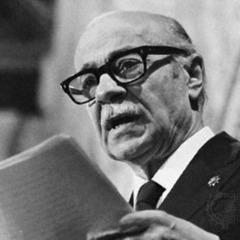
Ernesto Sabato
Ernesto Sabato

Argentinian writer, born on June 24, 1911, and died on April 30, 2011. Ernesto Sabato is known for his profound philosophical thoughts and unique literary style, being an important figure in Latin American literature of the 20th century. more

You May Also Like

“When our thoughts turn towards the past, we are often mired in the seductive trap of regret or bathed in the illusory glow of nostalgia. We wallow in the murky waters of what once was, reaching out to the shadows of deeds done and words uttered. Yet, the past is but a deserted stage, the actors long departed, the play concluded. No amount of wandering in its hallowed halls can change the script that was once performed.”

“By the old Moulmein Pagoda, lookin' lazy at the sea, There's a Burma girl a-settin', and I know she thinks o' me; For the wind is in the palm-trees, and the temple-bells they say: "Come you back, you British soldier; come you back to Mandalay!" Come you back to Mandalay, Where the old Flotilla lay: Can't you 'ear their paddles chunkin' from Rangoon to Mandalay ? On the road to Mandalay, Where the flyin'-fishes play, An' the dawn comes up like thunder outer China 'crost the Bay! 'Er petticoat was yaller an' 'er little cap was green, An' 'er name was Supi-yaw-lat - jes' the same as Theebaw's Queen, An' I seed her first a-smokin' of a whackin' white cheroot, An' a-wastin' Christian kisses on an 'eathen idol's foot: Bloomin' idol made o' mud Wot they called the Great Gawd Budd Plucky lot she cared for idols when I kissed 'er where she stud! On the road to Mandalay... When the mist was on the rice-fields an' the sun was droppin' slow, She'd git 'er little banjo an' she'd sing "Kulla-lo-lo! With 'er arm upon my shoulder an' 'er cheek agin my cheek We useter watch the steamers an' the hathis pilin' teak. Elephints a-pilin' teak In the sludgy, squdgy creek, Where the silence 'ung that 'eavy you was 'arf afraid to speak! On the road to Mandalay... But that's all shove be'ind me - long ago an' fur away An' there ain't no 'busses runnin' from the Bank to Mandalay; An' I'm learnin' 'ere in London what the ten-year soldier tells: "If you've 'eard the East a-callin', you won't never 'eed naught else." No! you won't 'eed nothin' else But them spicy garlic smells, An' the sunshine an' the palm-trees an' the tinkly temple-bells; On the road to Mandalay... I am sick o' wastin' leather on these gritty pavin'-stones, An' the blasted English drizzle wakes the fever in my bones; Tho' I walks with fifty 'ousemaids outer Chelsea to the Strand, An' they talks a lot o' lovin', but wot do they understand? Beefy face an' grubby 'and - Law! wot do they understand? I've a neater, sweeter maiden in a cleaner, greener land! On the road to Mandalay... Ship me somewheres east of Suez, where the best is like the worst, Where there aren't no Ten Commandments an' a man can raise a thirst; For the temple-bells are callin', an' it's there that I would be By the old Moulmein Pagoda, looking lazy at the sea; On the road to Mandalay, Where the old Flotilla lay, With our sick beneath the awnings when we went to Mandalay! O the road to Mandalay, Where the flyin'-fishes play, An' the dawn comes up like thunder outer China 'crost the Bay !”

“But the chief cause of both of these ills is that we do not adapt ourselves to the present. but send our thoughts a long way ahead. And so foresight, the noblest blessing of the human race, becomes perverted. Beasts avoid the dangers which they see, and when they have escaped them are free from care; but we men torment ourselves over that which is to come as well as over that which is past. Many of our blessings bring bane to us; for memory recalls the tortures of fear, while foresight anticipates them. The present alone can make no man wretched.”

“I’m kind of grateful to the Anglican tradition for its benign tolerance... I suppose I’m a cultural Anglican and I see evensong in a country church through much the same eyes as I see a village cricket match on the village green. I have a certain love for it.”

“În universurile paralele ești încă viu, Theo, dar eu trăiesc în lumea reală în care în dimineața asta tu ai parte de o înmormântare cu sicriul deschis. Știu că ești acolo și asculți. Și ar trebui să știi că-s foarte supărat pentru că ai promis că nu vei muri și iată-ne totuși aici. Iar faptul că nu e prima promisiune pe care ai încălcat-o mă doare și mai tare.”

“I want to tell the rebels that I am alive. That I'm right here in District Eight, where the Capitol has just bombed a hospital full of unarmed men, women and children. There will be no survivors." The shock I've been feeling begins to give way to fury. "I want to tell people that if you think for one second the Capitol will treat us fairly if there's a cease-fire, you're deluding yourself. Because you know who they are and what they do." My hands go out automatically, as if to indicate the whole horror around me. "This is what they do and we must fight back!" "President Snow says he's sending a message. Well I have one for him. You can torture us and bomb and burn our districts to the ground, but do you see that?" One of the cameras follows where I point to the planes burning on the roof of a warehouse across from us. "Fire is catching!" I am shouting now, determined he will not miss a word of it, "And if we burn, you burn with us!”

“We admire and try to collect things not so much for their beauty or value as for their association with a phase of our past; and that is understandable, every generation has done the same. But with us the association seems to be not with our politically historical past, but with a kind of private vernacular past—what we cherish are mementos of a bygone daily existence without a definite date.”