Quotessence
Home / Quotes / Quote by Giorgio Agamben

Quote by Giorgio Agamben

“If one reads attentively, Wittgenstein writes as much in one of the rare pas- sages in which he makes use (in English) of the term “to constitute” with respect to the rules of chess: What idea do we have of the king of chess, and what is its relation to the rules of chess? . . . Do these rules follow from the idea? No, the rules are not something contained in the idea and got by analyzing it. They constitute it. . . . The rules constitute the “freedom” of the pieces. (Wittgenstein 5, p. 86) Rules are not separable into something like an idea or a concept of the king (the king is the piece that is moved according to this or that rule): they are immanent to the movements of the king; they express the autoconstitution process of their game. In the autoconstitution of a form of life what is in question is its freedom.”

Quote by Giorgio Agamben

Work

The Omnibus Homo Sacer

This book is a compilation of various academic essays and studies that delve into the philosophical and sociological implications of Homo Sacer, a term from ancient Roman law referring to an individual who is outside the protection of the law and thus considered to be a sacrificeable person. more

Author
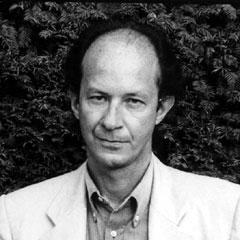
Giorgio Agamben
Giorgio Agamben

Giorgio Agamben is an Italian philosopher born on April 22, 1942. His research spans various fields including language, politics, aesthetics, and ethics, particularly known for his analyses of language, power, and the state of human existence. more

You May Also Like

“The fact is that the modern implementation of the prison planet has far surpassed even Orwell’s 1984 and the only difference between our society and those fictionalized by Huxley, Orwell and others, is that the advertising techniques used to package the propaganda are a little more sophisticated on the surface. Yet just a quick glance behind the curtain reveals that the age old tactics of manipulation of fear and manufactured consensus are still being used to force humanity into accepting the terms of its own imprisonment and in turn policing others within the prison without bars.”

“This conjunction of an immense military establishment and a large arms industry is new in the American experience. The total influence -- economic, political, even spiritual -- is felt in every city, every State house, every office of the Federal government. We recognize the imperative need for this development. Yet we must not fail to comprehend its grave implications. Our toil, resources and livelihood are all involved; so is the very structure of our society. In the councils of government, we must guard against the acquisition of unwarranted influence, whether sought or unsought, by the militaryindustrial complex. The potential for the disastrous rise of misplaced power exists and will persist. We must never let the weight of this combination endanger our liberties or democratic processes. We should take nothing for granted. Only an alert and knowledgeable citizenry can compel the proper meshing of the huge industrial and military machinery of defense with our peaceful methods and goals, so that security and liberty may prosper together.”

“For the anarch, little has changed; flags have meaning for him, but not sense. I have seen them in the air and on the ground like leaves in May and November; and I have done so as a contemporary and not just as a historian. The May Day celebration will survive, but with a different meaning. New portraits will head up the processions. A date devoted to the Great Mother is re-profaned. A pair of lovers in the wood pays more homage to it. I mean the forest as something undivided, where every tree is still a liberty tree. For the anarch, little is changed when he strips off a uniform that he wore partly as fool’s motley, partly as camouflage. It covers his spiritual freedom, which he will objectivate during such transitions. This distinguishes him from the anarchist, who, objectively unfree, starts raging until he is thrust into a more rigorous straitjacket.”