Quotessence
Home / Quotes / Quote by Leo Tolstoy

Quote by Leo Tolstoy

“La femme est privée de droits parce qu'elle est privée d'instruction, et le manque d'instruction tient à l’absence de droits. N’oublions pas que l'esclavage de la femme est si ancien, si enraciné dans nos mœurs, que bien souvent nous sommes incapables de comprendre l'abîme légal qui la sépare de nous.”

Quote by Leo Tolstoy

Work

ANNA KARENINA

Anna Karenina is a profound literary work that delves into the complexities of human relationships and the impact of societal expectations on individual lives. The story follows the tragic fate of Anna, a married woman who falls in love with Count Vronsky, leading to a series of dramatic events that challenge the moral and social fabric of her world. more

Author

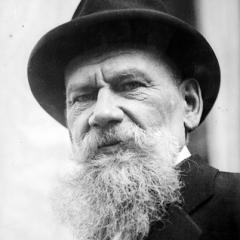
Leo Tolstoy
Leo Tolstoy

Leo Tolstoy was a Russian writer and thinker, a prominent representative of 19th-century Russian literature. His works deeply revealed social contradictions and human nature, and had a profound impact on the world. more

You May Also Like

“Depuis que je suis née je n'ai pas vu d'hommes qui se donnassent entièrement à la femme qu'ils aimaient. Et je n'ai jamais vu d'hommes qui ne cherchent dans leur compagnie quelque chose de soumis, d'agréable, d'odorant, de nourricier, d'approbateur, une enveloppe tiède et douce, une part de sa reproduction, un souvenir de mère. Les absentes sont toujours là. Les grandes absentes sont de jour en jour plus hautes et l'ombre qu'elles portent plus opaque. Ce qui a été perdu a toujours raison.”

“Agnosticism is compatible with faith. We either believe or not, irrespective of our ability to find the truth. Faith, developed or established based on the nominal religion, is not proof of our ability to prove God’s existence and is not proof of our implied agnosticism. Genuine faith is based on the belief in God regardless of the lack of evidence, religion, or agnosticism that may exist in a believer.”

“Where is any author in the world Teaches such beauty as a woman's eye? — Love's Labor Lost. The eyes appears to be more immediately connected with the soul than any other organ. A woman reflects every emotion, almost every thought from her two wonderful, priceless eyes, and no feature of her face is more a telltale of her nature. "Show me," says the old Chinese proverb, "a man's eyes, and I will tell you what he might have been. Show me his mouth, and I will tell you what he has been." The same is true of women. Up to thirty or thirty-five a woman may be actress enough to make her eyes tell one tale, while her life would reveal another; but little by little the true state of a woman's soul stands forth in the expression, the frankness, the furtiveness, the candor, or the boldness”