Quotessence
Home / Quotes / Quote by Katharine Hepburn

Quote by Katharine Hepburn

Work

Author

Katharine Hepburn
Katharine Hepburn

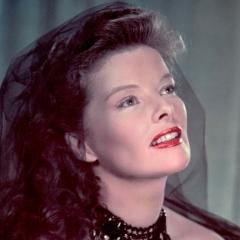
Katharine Hepburn (May 12, 1907 – June 29, 2003) was an iconic American actress known for her fierce independence, sharp wit, and distinctive voice. With a career spanning over six decades, she won four Academy Awards for Best Actress, a record that still stands. Hepburn starred in classic films such as The Philadelphia Story, The African Queen, and Guess Who's Coming to Dinner. She defied Hollywood conventions, refusing to conform to traditional gender roles, and became a symbol of female empowerment. Her legacy as a trailblazer in cinema and culture remains unparalleled. more

You May Also Like

“They were dying slowly - it was very clear. They were not enemies, they were not criminals, they were nothing earthly now - nothing but black shadows of disease and starvation, lying confusedly in the greenish gloom. Brought from all the recesses of the coast in all the legality of time contracts, lost in uncongenial surroundings, fed on unfamiliar food, they sickened, became inefficient, and were then allowed to crawl away and rest.”

“Shortly afterwards, it sounded as if the rocket-propelled grenades (RPGs) were landing dangerously close - so close that I immediately dropped to the floor, prompting an unflinching Congolese man in the lobby, who’d obviously endured much worse, to jokingly say, ”I see you do not enjoy the beautiful music we play here in the Congo.” It is still one of the most reassuring things anyone has ever said to me in the midst of a crisis….”

“War crimes, you say? No matter how many policies you put on paper, in reality, there are no rights and wrongs in war. War itself is a crime. War cannot be justified. I believe, the only people, in this world, whose opinions matter, are the ones who go the extra mile to help other people expecting nothing in return. Soldiers who fight fiercely for their country, the doctors in Sri Lanka's public hospitals attending to hundreds of patients at a time for no extra pay , the nuns who voluntarily teach English and math to children of refugee camps in the north, the monks who collect food to feed entire villages during crises, they are the people worth listening to, their opinion matters. So find me one of them who will say: they wish the war didn't end in 2009, that they wish Sri Lanka was divided into two parts. Find me one of them who agrees with the international war crime allegations against Sri Lanka, and I will listen. But I will not listen to the opinions of those who are paid to find faults in a war they were never a part of, a war they never experienced themselves. I will not listen to the opinions of those who watched the war on tv or read about it on the internet or were moved by a documentary on Al Jazeera. The war is over. The damage is done. Let Sri Lanka move on. So our children will never have to see what we've seen.”

“As to the efficacy of the policy recommended by Rostow, it speaks for itself: no country, once underdeveloped, ever managed to develop By Rostow's stages. Is that why Rostow is now trying to help the people of Vietnam, the Congo, the Dominican Republic, and other underdeveloped countries to overcome the empirical, theoretical, and policy shortcomings of his manifestly non-communist intellectual aid to economic development and cultural change by bombs, napalm, chemical and biological weapons, and military occupation?”

“Contrary to what most politicians and interveners preach, outside experts, national leaders, and top-down approaches are not the only means to reestablishing peace. Bottom-up initiatives can also make a difference, and ordinary people have the capacity to address some of the deeper roots of their country’s problems.”