“If, years later, I do use the slit detector to observe which way the electron went, it will mean that many years earlier the electron must have passed through one slit or the other. But if I don't use the "slit detector," then the electron must have passed through both slits. This is, of course, extremely weird. My actions at the beginning of the twenty-first century can change what happened thousands of years ago when the electron began its journey. It seems that just as there are multiple futures, there are also multiple pasts, and my acts of observation in the present can decide what happened in the past. As much as it challenges any hope of ever really knowing the future, quantum physics asks whether I can ever really know the past. It seems that the past is also in a superposition of possibilities that crystallize only once they are observed.”
Quote by Marcus du Sautoy
Work
Browse quotes and source details for this work. more
Author
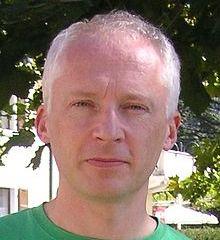
Marcus du Sautoy is a renowned British mathematician known for his work in group theory and geometry. Born on August 26, 1965, he currently holds the position of professor at the University of Oxford. Professor du Sautoy has also made significant contributions to mathematics education and outreach, authoring several popular mathematics books and participating in the production of several educational programs on mathematics. more
You May Also Like
“Being weird adds spice to life. Having weird friends just deepens the flavor”
“You want to be popular? It’s easy to do. Just be a total weirdo and love yourself for it.”
“The worst thing that could ever happen to Noah has happened. He's become normal.”
“At this point I think we need to embrace the weird. High-five it. Give it our phone number.”