Quotessence
Home / Quotes / Quote by Frances Hodgson Burnett

Quote by Frances Hodgson Burnett

“... history is not a mere lesson in a schoolbook, but is a relation of the life stories of men and women who saw strange and splendid days, and sometimes suffered strange and terrible things.”

Quote by Frances Hodgson Burnett

Work

The Lost Prince

In this gripping narrative, readers are taken on a thrilling quest to uncover the fate of a lost prince, blending elements of historical fiction with a touch of fantasy. more
Author

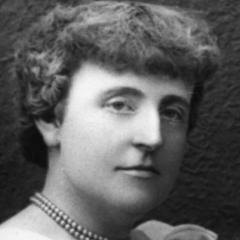
Frances Hodgson Burnett

Frances Hodgson Burnett was an English playwright known for her rich imagination and delicate emotional descriptions. Her works spanned various genres including drama, novels, and poetry, with her most famous works being 'Little Women' and 'The Secret Garden'. Born on November 24, 1849, she passed away on October 29, 1924. more

You May Also Like

“Loneliness Psychology (No-Nonsense Sonnet) Being happy alone is no sign of genius, It is either narcissism or hypocrisy. You've got to be extremely selfish, To be happy without human company. If your heart is alive and human, Loneliness will cause you misery. It's only the self-absorbed animal, Who don't need people to be happy. It's okay if you are alone and miserable, It is but a healthy mind's healthy reaction. Do not romanticize it with phony philosophy, For derangement starts with self-deception. Fact of the matter is - I suffer, therefore I am. Life is but a cosmic dance between dusk and dawn.”

“It can be difficult to speak truth to power. Circumstances, however, have made doing so increasingly necessary.”

“Isn’t much of our great poetry just a rich description of the ‘self’ in fall? The art keeps alive the feeling of complete control. Yet it is only lyrical mastery of the destruction of the place we thought our home. Our universal lament, the unwantedness of a world where a soul must suffer to grow. The beloved song, resonating the reverberations of a breaking heart.”

“The third Preface for Easter tells us that Jesus is ‘still our priest, our advocate who always pleads our cause. Christ is the victim who dies no more, the Lamb once slain who lives forever.’ The original Latin is more paradoxical: Jesus is ‘agnus qui vivit semper occisus’; the lamb who lives forever slain.’ If the risen Lord did not still have his wounds, then he would not have much to do with us now. The resurrection might promise us some future healing and eternal life, but it would leave us now alone in our present hurting. But because of Easter Day we already share in the victory. He still shares our wounds and we share his victory of death. We too are now wounded and healed. When Brian Pierce OP first went to Peruvian Andes, he was surprised by the ubiquitous images of the crucified Christ, covered with blood. It seemed as if the faith of these indigenous people stopped prior to the resurrection and they were left only with images of defeat. But he learned that he was wrong. These crosses are signs of how the risen Christ is now sharing their crucifixion. We can have courage and risk getting hurt. Charles Peguy, the French writer, told the story of a man who died and went to heaven. When he met the recording angel he was asked, ‘Show me your wounds.’ And he replied, ‘Wounds? I have not got any.’ And the angel said, ‘Did you never think that anything was worth fighting for?”

“Knowing we are valuable to God means we will care for wounds as we discover them. It means we will submit to the whole healing process, even the painful parts that feel like antiseptic or physical therapy. It means we will not pretend hard things don't hurt or emotions aren't real or death doesn't sting. It means we will weep when we're sad, laugh when we feel joy, have silence when we don't have words, and shout when it's right. It means we will acknowledge our own grief and attend to it. It means each generation becomes a little more healed and whole as we go, until the whole world is reconciled to Christ in wholeness.”