Quotessence
Home / Quotes / Quote by Bill Courtney

Quote by Bill Courtney

“How did you act when all was not good? Did you rise to the challenge? Did you display grit, resilience, and integrity in your response? Character isn't about being perfect or always doing the right thing. Character is how you respond to your own failures. It’s when you screw up and life hits you in the mouth that you have an opportunity to reveal your inner strength.”

Quote by Bill Courtney

Work

Against the Grain: A Coach's Wisdom on Character, Faith, Family, and Love

In 'Against the Grain: A Coach's Wisdom on Character, Faith, Family, and Love,' the author shares personal experiences and coaching philosophies that emphasize the significance of these core aspects in both personal and athletic endeavors. The book delves into the development of character, the role of faith in overcoming challenges, the importance of family support, and the power of love in achieving goals. It serves as a guide for readers seeking to cultivate a strong moral compass and a balanced life. more

Author
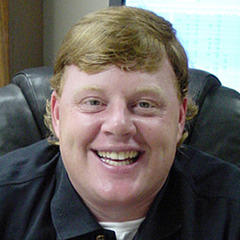
Bill Courtney
Bill Courtney

Bill Courtney, born on August 24, 1968, is an experienced American football coach. He began his coaching career in high school and has held various positions in teams at multiple levels. Known for his profound understanding of players and exceptional leadership, Courtney has led his teams to significant achievements, including multiple regional and state championships. His teaching methods and care for players have also been widely recognized, and his leadership style and methods have had a profound impact on the growth of young athletes. more

You May Also Like

“As an unperfect actor on the stage, Who with his fear is put besides his part, Or some fierce thing replete with too much rage, Whose strength's abundance weakens his own heart; So I, for fear of trust, forget to say The perfect ceremony of love's rite, And in mine own love's strength seem to decay, O'ercharg'd with burden of mine own love's might. O, let my books be then the eloquence And dumb presagers of my speaking breast; Who plead for love, and look for recompense, More than that tongue that more hath more express'd. O, learn to read what silent love hath writ: To hear with eyes belongs to love's fine wit.”

“We are dealing, then, with an absurdity that is not a quirk or an accident, but is fundamental to our character as people. The split between what we think and what we do is profound. It is not just possible, it is altogether to be expected, that our society would produce conservationists who invest in strip-mining companies, just as it must inevitably produce asthmatic executives whose industries pollute the air and vice-presidents of pesticide corporations whose children are dying of cancer. And these people will tell you that this is the way the "real world" works. The will pride themselves on their sacrifices for "our standard of living." They will call themselves "practical men" and "hardheaded realists." And they will have their justifications in abundance from intellectuals, college professors, clergymen, politicians. The viciousness of a mentality that can look complacently upon disease as "part of the cost" would be obvious to any child. But this is the "realism" of millions of modern adults. There is no use pretending that the contradiction between what we think or say and what we do is a limited phenomenon. There is no group of the extra-intelligent or extra-concerned or extra-virtuous that is exempt. I cannot think of any American whom I know or have heard of, who is not contributing in some way to destruction. The reason is simple: to live undestructively in an economy that is overwhelmingly destructive would require of any one of us, or of any small group of us, a great deal more work than we have yet been able to do. How could we divorce ourselves completely and yet responsibly from the technologies and powers that are destroying our planet? The answer is not yet thinkable, and it will not be thinkable for some time -- even though there are now groups and families and persons everywhere in the country who have begun the labor of thinking it. And so we are by no means divided, or readily divisible, into environmental saints and sinners. But there are legitimate distinctions that need to be made. These are distinctions of degree and of consciousness. Some people are less destructive than others, and some are more conscious of their destructiveness than others. For some, their involvement in pollution, soil depletion, strip-mining, deforestation, industrial and commercial waste is simply a "practical" compromise, a necessary "reality," the price of modern comfort and convenience. For others, this list of involvements is an agenda for thought and work that will produce remedies. People who thus set their lives against destruction have necessarily confronted in themselves the absurdity that they have recognized in their society. They have first observed the tendency of modern organizations to perform in opposition to their stated purposes. They have seen governments that exploit and oppress the people they are sworn to serve and protect, medical procedures that produce ill health, schools that preserve ignorance, methods of transportation that, as Ivan Illich says, have 'created more distances than they... bridge.' And they have seen that these public absurdities are, and can be, no more than the aggregate result of private absurdities; the corruption of community has its source in the corruption of character. This realization has become the typical moral crisis of our time. Once our personal connection to what is wrong becomes clear, then we have to choose: we can go on as before, recognizing our dishonesty and living with it the best we can, or we can begin the effort to change the way we think and live.”

“The 10 ever greatest misplacements in life: 1. Leadership without character. 2. Followership without servant-being. 3. Brotherhood without integrity. 4. Affluence without wisdom. 5. Authority without conscience. 6. Relationship without faithfullness. 7. Festivals without peace. 8. Repeated failure without change. 9. Good wealth without good health. 10. Love without a lover.”