Quotessence
Home / Quotes / Quote by Tacitus

Quote by Tacitus

“When [Servius Galba] was a commoner he seemed too big for his station, and had he never been emperor, no one would have doubted his ability to reign.”

Quote by Tacitus

Work

The Histories

This work is a detailed account of historical events, focusing on the political and military developments of ancient civilizations. more
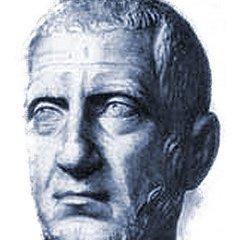
Author

Tacitus
Tacitus

Tacitus, born in 56 AD and died in 117 AD, was a renowned Roman historian of the ancient period. His works are known for their rigorous factual recording and profound critical analysis, with 'The Annals' and 'The Histories' being significant sources for the study of the early history of the Roman Empire. more

You May Also Like

“But we are all Goths, for all that, whoever we are; which is to say, Outlanders. And like the Goth Sarus we still owe loyalty to an Empire, but we no longer know of what the Empire consists. We are still bound by the statement of Stilicho that the highest duty in the World is the proper ordering of the World. There will be, and are, other worlds; and perhaps it is not a terrible thing that a world should end. But we are still in admiration at the great corpse of it.”

“The historian Cassiodorus believed that the selective destruction of Alaric, as regards the Greek monuments, was of good effect. Alaric had some taste and was awed by really great art. The Greeks were only human, and all their work could not have been excellent. But almost all their ancient work that survived the ravages of Alaric was of unsurpassed excellence. There is abominable and worthless ancient Greek art in Asia Minor, in Constantinople, in Thebes, in Eritrea, in the Cyclades and other islands. There is little or none of this worthless ancient art surviving in the path of the Gothic Greek adventure; not in Athens, or Megara or Corinth or Argos. Sparta does not figure in the account at all; it never had art. It is said that Alaric destroyed half of the art of Greece. It may have been the worst half. He was a critic of unusual effectiveness.”

“This short history should have something to satisfy every taste and perversion: action, treachery, fratricide and regicide, corruption, and bloodshed. It contains thirteen murders, the victims being mostly of one family. It lists the ways in which a man or an Empire may be surrounded and destroyed; and contains a veritable catalog of subversions and finely wrought treacheries—which the reader may be able to make use of in his own life.”

“That freedom, the plunging back into the ancient past, appears always to have heightened his alienation from the present. To sure his love for classical Latin didn't lead him to idealize, as some of his contemporaries did Ancient Roman history, Poggio understand that history had it's full measure of full folly and wickedness. But he was aware that the city in which he lived was a pathetic shadow of it's past glory.”