Quotessence
Home / Quotes / Quote by Markus Zusak

Quote by Markus Zusak

“It was a year for the ages, like 79, like 1346, to name just a few. Forget the scythe, Goddamn it, I needed a broom or a mop. And I needed a vacation.”

Quote by Markus Zusak

Work

The Book Thief

This novel is a poignant story of survival and the power of literature. Narrated by Death, it follows the life of Liesel Meminger, a girl who is sent to live with a German family during the tumultuous years of World War II. Liesel becomes deeply involved with her foster family, learning to read and write, and finding solace in books amidst the chaos of the war. The story explores themes of love, loss, and the human spirit in the face of adversity. more
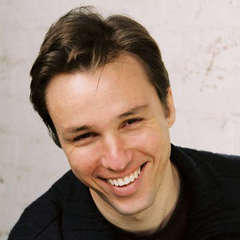
Author

Markus Zusak
Markus Zusak

Markus Zusak, born on June 23, 1975, is an acclaimed Australian author known for his unique narrative style and profound thematic insights. His works have garnered widespread praise from readers and critics alike. more

You May Also Like

“The first time I was ever called ugly, I was thirteen. It was a rich friend of my brother Carlton's over to shoot guns in the field. 'Why you crying, girl?' Constantine asked me in the kitchen. I told her what the boy had called me, tears streaming down my face. 'Well? Is you?' I blinked, paused my crying. 'Is I what?' 'Now you look a here, Egenia'-because constantien was the only one who'd occasionally follow Mama's rule. 'Ugly live up on the inside. Ugly be a hurtful, mean person. Is you one a them peoples?' 'I don't know. I don't think so,' I sobbed. Constantine sat down next to me, at the kitchen table. I heard the cracking of her swollen joints. She pressed her thumb hard in the palm of my hand, somthing we both knew meant Listen. Listen to me. 'Ever morning, until you dead in the ground, you gone have to make this decision.' Constantine was so close, I could see the blackness of her gums. 'You gone have to ask yourself, Am I gone believe what them fools say about me today?' She kept her thumb pressed hard in my hand. I nodded that I understood. I was just smart enough to realize she meant white people. And even though I still felt miserable, and knew that I was, most likely, ugly, it was the first time she ever talked to me like I was something besides my mother's white child. All my life I'd been told what to believe about politics, coloreds, being a girl. But with Constantine's thumb pressed in my hand, I realized I actually had a choice in what I could believe.”

“Attitude is more important than facts. It is more important than the past, than education, money, circumstances, than failures and success, than what other people think, say, or do. It is more important than appearance, ability, or skill. It will make or break a business, a home, a friendship, an organization. The remarkable thing is I have a choice every day of what my attitude will be. I cannot change my past. I cannot change the actions of others. I cannot change the inevitable. The only thing I can change is attitude. Life is ten percent what happens to me and ninety percent how I react to it.”

“She wasn’t afraid of difficulties; what frightened her was being forced to choose one particular path. Choosing a path meant having to miss out on others. She had a whole life to live and she was always thinking that, in future, she might regret the choices she made now. ‘I’m afraid of committing myself,’ she thought to herself. She wanted to follow all possible paths and so ended up following none. Even in that most important area of her life, love, she had failed to commit herself. After her first romantic dissappointment, she had never again given herself entirely. She feared pain, loss and separation. These things were inevitable on the path to love, and the only way of avoiding them was by deciding not to take that path at all. In order not to suffer, you had to renounce love. It was like putting out your own eyes in order not to see the bad things in life.”