Quotessence
Home / Quotes / Quote by Ta-Nehisi Coates

Quote by Ta-Nehisi Coates

“I know now that all people hunger for a noble, unsullied past, that as sure as the black nationalist dreams of a sublime Africa before the white man's corruption, so did Thomas Jefferson dream of an idyllic Britain before the Normans, so do all of us dream of some other time when things were so simple. I know now that that hunger is a retreat from the knotty present into myth and that what ultimately awaits those who retreat into fairy tales, who seek refuge in the mad pursuit to be made great again, in the image of greatness that never was, is tragedy.”

Quote by Ta-Nehisi Coates

Work

We Were Eight Years in Power: An American Tragedy

This book is a compilation of essays that delve into the political and social dynamics of the United States during a specific eight-year period. The author examines the complexities of race, identity, and power, offering insights into the political climate of the time. more

Author
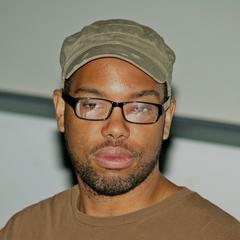
Ta-Nehisi Coates
Ta-Nehisi Coates

Ta-Nehisi Coates is an American writer known for his insightful social commentary and literary works. His writings often focus on themes of race, history, and social justice, with his most famous work being 'Between the World and Me', which won the Pulitzer Prize in 2015. more

You May Also Like

“But actually, he thought as he re-adjusted the Ministry of Plenty’s figures, it was not even forgery. It was merely the substitution of one piece of nonsense for another. Most of the material that you were dealing with had no connection with anything in the real world, not even the kind of connection that is contained in a direct lie. Statistics were just as much a fantasy in their original version as in their rectified version. A great deal of the time you were expected to make them up out of your head.”

“In the United States we are at such a disadvantage because we do not know how to talk about the genocide inflicted on indigenous people. We do not know how to talk about slavery. Otherwise it would not have been assumed that simply because of the election of one Black man to the presidency we would leap forward into a postracial era. We do not acknowledge that we all live on colonized land. And in the meantime, Native Americans live in impoverished conditions on reservations. They have an extremely high incarceration rate—as a matter of fact, per capita the highest incarceration rate—and they suffer disproportionately from such diseases as alcoholism and diabetes. In the meantime, sports teams still mock indigenous people with racially derogatory names, like the Washington Redskins. We do not know how to talk about slavery, except, perhaps, within a framework of victim and victimizer, one that continues to polarize and implicate.”

“The California State Department of Education has issued guidelines called “Standards for Evaluation of Instructional Materials with Respect to Social Content.” According to Education Code section 60040(a) and 60044(a), “Whenever an instructional material presents developments in history or current events, or achievements in art, science, or any other field, the contributions of women and men should be represented in approximately equal number.“ In effect, this law demands that the historian be more attentive to the demands of “equal representation” than to the historical facts. Needless to say, histories and social studies presented in this “fair” but factually skewed manner constitute an unworthy and dishonest approach to learning.”

“³In order to judge anything rightly, one would have to be fully aware of an inconceivably wide range of things; past, present and to come. ⁴One would have to recognize in advance all the effects of his judgments on everyone and everything involved in them in any way. ⁵And one would have to be certain there is no distortion in his perception, so that his judgment would be wholly fair to everyone on whom it rests now and in the future. ⁶Who is in a position to do this? [M-10.3:3-6]”

“The true basis for the Nuremberg Trial, the one which no one has ever dared to point out, is, I suspect, not fear: it is the spectacle of the ruins, it is the panic of the victors. It is necessary that the others be in the wrong. It is necessary, for if, by chance, they had not been monsters, how would the victors bear the weight of all those destroyed cities, and those thousands of phosphorus bombs? It is the horror, it is the despair of the victors which is the true motive for the trial. They have veiled their faces before what they were forced to do and, to give themselves courage, they transformed their massacres into a crusade. They invented a posteriori a right to massacre in the name of respect for humanity. Being killers, they promoted themselves to policemen.”

“I could offer any number of reasons. I could talk eloquently on the subject for days on end, until my tongue was sore, only to find there was still more to say, yet more answers clamoring for attention. Experience tells me that too many answers are the same as none at all; perhaps only one can constitute a real answer. So I will supply just a single explanation, one that I think may be the most important; whether it is the true answer is impossible to know. It's your experience while growing up, I believe, that shapes the direction of your life. A basic image of the world is planted deep in your mind, and then, like a document in a copy machine, it keeps being reprinted again and again throughout your formative years. Once you reach adulthood, whether you're successful or not, whatever you accomplish can only partially revise that most basic image; it will never be entirely transformed. Naturally some revise the image more and some revise it less. Mao Zedong, I'm sure, made more revisions than I have done.”