“Perhaps it is time to question goals that run counter to near-universal behavior. There may be lessons for us in the failure of Soviet-style Communism. It is our era's foremost example of a system that made mesmerizing promises of an earthly paradise but betrayed those promises. Millions of people were inspired by an ideology that would do away with capitalist exploitation. Marxists believed that the working class would seize the means of production, the state would wither away, selfishness would disappear, and man would live 'from each according to his ability to each according to his needs.' In the name of this ideology millions gave their lives and took the lives of millions of others. Communism failed. It failed for many reasons, not least because it was a misreading of human nature. Selfishness cannot be abolished. People do not work just as hard on collective farms as they do on their own land. The almost universal rejection of Communism today marks the acceptance of people as they are, not as Communism wished them to be. Is it possible that our racial ideals assume that people should become something they cannot? If most people prefer the company of people like themselves, what do we achieve by insisting that they deny that preference? If diversity is a weakness rather than a strength, why work to increase diversity?”
Quote by Jared Taylor
Work
White Identity: Racial Consciousness in the 21st Century
Browse quotes and source details for this work. more
Author
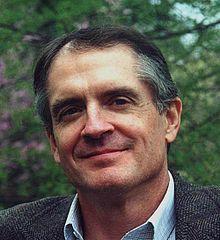
Jared Taylor
Jared Taylor, born on September 15, 1951, is an American journalist known for his views on racism and immigration issues. He was the editor of 'American Renaissance' magazine and has contributed articles to various publications, including 'The American Conservative' and 'The New American'. more
You May Also Like
Source: Emotional First Aid: Practical Strategies for Treating Failure, Rejection, Guilt, and Other Everyday Psychological Injuries
“And the mind can do anything. It can create anything. It is God, Khosrou. The mind is God.”
Source: Everything Sad Is Untrue
Source: Mission Reality
Source: Mission Reality
Source: The Emperor's Soul
“Violence is in our DNA, so is Peace. It’s our will that determines which one comes to action.”
Source: When Humans Unite: Making A World Without Borders
Source: A Shore of Spiritual Shells: Poetry For Inner Strength And Faith
Source: We Are All Black: A Treatise on Racism