Quotessence
Home / Quotes / Quote by Mikhail Bakunin

Quote by Mikhail Bakunin

“Is it necessary to point out to what extent and in what manner religions debase and corrupt the people? They destroy their reason, the principal instrument of human emancipation, and reduce them to imbecility, the essential condition of their slavery. They dishonor human labor, and make it a sign and source of servitude. They kill the idea and sentiment of human justice, ever tipping the balance to the side of triumphant knaves, privileged objects of divine indulgence. They kill human pride and dignity, protecting only the cringing and humble. They stifle in the heart of nations every feeling of human fraternity, filling it with divine cruelty instead.”

Quote by Mikhail Bakunin

Work

God and the State

This book delves into the complex interplay between religious beliefs and political systems, offering a critical examination of the influence of religion on statecraft. more

Author

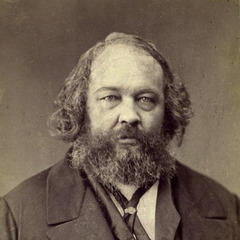
Mikhail Bakunin
Mikhail Bakunin

Mikhail Bakunin, born on May 30, 1814, and died on July 1, 1876, was a significant thinker and revolutionary from Russia. His ideas had a profound impact on the later anarcho-syndicalist movement. more

You May Also Like

“Before operating on a patient's brain, I realized, I must first understand his mind: his identity, his values, what makes his life worth living, & what devastation makes it reasonable to let that life end. The cost of my dedication to succeed was high, & the ineluctable failures brought me nearly unbearable guilt. Those burdens are what make medicine holy & wholly impossible.”

“Nobody reads poetry, we are told at every inopportune moment. I read poetry. I am somebody. I am the people, too. It can be allowed that an industrious quantity of contemporary American poetry is consciously written for a hermetic constituency; the bulk is written for the bourgeoisie, leaving a lean cut for labor. Only the hermetically aimed has a snowball's chance in hell of reaching its intended ears. One proceeds from this realization. A staggering figure of vibrant, intelligent people can and do live without poetry, especially without the poetry of their time. This figure includes the unemployed, the rank and file, the union brass, banker, scientist, lawyer, doctor, architect, pilot, and priest. It also includes most academics, most of the faculty of the humanities, most allegedly literary editors and most allegedly literary critics. They do so--go forward in their lives, toward their great reward, in an engulfing absence of poetry--without being perceived or perceiving themselves as hobbled or deficient in any significant way. It is nearly true, though I am often reminded of a Transtromer broadside I saw in a crummy office building in San Francisco: We got dressed and showed the house You live well the visitor said The slum must be inside you. If I wanted to understand a culture, my own for instance, and if I thought such an understanding were the basis for a lifelong inquiry, I would turn to poetry first. For it is my confirmed bias that the poets remain the most 'stunned by existence,' the most determined to redeem the world in words..”

“P. Sainath says, 'What we need to do is not just destroy the caste hierarchy but simultaneously create respect for the work and labour that people do, for what they produce. I have always maintained that untouchability is not just a social evil. It’s more than that. It’s an extremely cruel, vicious but sophisticated form of exploitation by which we keep a large labour force permanently demoralised, humiliated and dependent. So we need to destroy the feudal relations of production completely; we need to accept that if a son or daughter of a potter, weaver or leather worker do not want to be in that field, it’s a perfectly legitimate need of theirs and they cannot under any circumstance be compelled. You need to break down the caste hierarchy and when you bring respect and economic returns for that skill, who knows—many other children in the village might want to do it. Look at the way we’ve destroyed weaving. Several weavers, who for countless years made the famous Kanjeevaram saree, are driving autorickshaws in Kanchi and Chennai, and this is called reskilling. These individuals hold within them cumulatively thousands of years of skill, knowledge and experience. We simply do not respect labour, we don’t give dignity to those who do this beautiful work. However, there are also professions and occupations that you want to see dead. I don’t want to see anybody take up or inherit manual scavenging. It is the greatest assault on human dignity that you can think of in a structured way. And it is perpetrated because we are somehow very comfortable with the idea of using the children of our poor to do the dirty work for us. So there are professions that have to be completely destroyed. And there are professions, occupations and livelihoods that have to be preserved. But not as they were in their old context but recreated in a new one.”