“It is hard to understand how a compassionate world order can include so many people afflicted by acute misery, persistent hunger and deprived and desperate lives, and why millions of innocent children have to die each year from lack of food or medical attention or social care. This issue, of course, is not new, and it has been a subject of some discussion among theologians. The argument that God has reasons to want us to deal with these matters ourselves has had considerable intellectual support. As a nonreligious person, I am not in a position to assess the theological merits of this argument. But I can appreciate the force of the claim that people themselves must have responsibility for the development and change of the world in which they live. One does not have to be either devout or non devout to accept this basic connection. As people who live-in a broad sense-together, we cannot escape the thought that the terrible occurrences that we see around us are quintessentially our problems. They are our responsibility-whether or not they are also anyone else's. As competent human beings, we cannot shirk the task of judging how things are and what needs to be done. As reflective creatures, we have the ability to contemplate the lives of others. Our sense of behavior may have caused (though that can be very important as well), but can also relate more generally to the miseries that we see around us and that lie within our power to help remedy. That responsibility is not, of course, the only consideration that can claim our attention, but to deny the relevance of that general claim would be to miss something central about our social existence. It is not so much a matter of having the exact rules about how precisely we ought to behave, as of recognizing the relevance of our shared humanity in making the choices we face.”
Quote by Amartya Sen
Work
Development as Freedom
This book delves into the philosophical and practical aspects of development, examining how it intersects with the idea of freedom. It discusses the historical and contemporary contexts of development and freedom, offering insights into the potential for individuals and communities to achieve both. more
Author
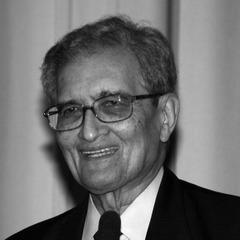
Amartya Sen
Amartya Sen is an Indian economist renowned for his contributions to welfare economics, development economics, and ethics. He won the Nobel Prize in Economics in 1979 and is considered one of the most outstanding economists of the 20th century. more
You May Also Like
Source: Echoes of Eternity: A Journey Through Indian Thought
Source: The Forgetting Time
Source: The Raven King
“Don't just hustle—design a model that multiplies your mind.”
Source: Your Business Venture: The Prep. The Pitch. The Funding.
Source: The Meditating Psychiatrist Who Tried to Kill Himself
Source: Can "White" People Be Saved?: Triangulating Race, Theology, and Mission