Quotessence
Home / Quotes / Quote by Shirley Chisholm

Quote by Shirley Chisholm

“different women view different segments of the women's movement agenda as priority items. (From Voices of Multicultural America)”

Quote by Shirley Chisholm

Author
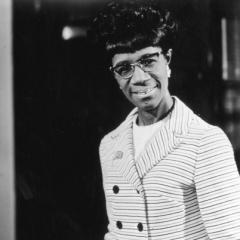
Shirley Chisholm
Shirley Chisholm

Shirley Chisholm was an American politician who became the first African American woman to serve in Congress and the first woman to run for a major party's nomination for President of the United States. Born on November 30, 1924, she represented New York's 12th congressional district from 1969 to 1983. A member of the Democratic Party, Chisholm was known for her advocacy for civil rights, women's rights, and social welfare. Her presidential campaign in 1972 marked a significant milestone in American politics. more

You May Also Like

“The movement has, for the most part, been led by educated white middle-class women. There is nothing unusual about this. Reform as movements are usually led by the better educated and better off. But, if the women's movement is to be successful you must recognize the broad variety of women there are and the depth and range of their interests and concerns. To black and Chicana women, picketing a restricted club or insisting on the title Ms. are not burning issues. They are more concerned about bread-and-butter items such as the extension of minimum wage, welfare reform and day care. Further, they are not only women but women of color and thus are subject to additional and sometimes different pressures. (From Voices of Multicultural America)”

“I came to two conclusions. One, being a woman, in this world, ultimately makes you crazy. And, two, you're more likely to be labeled crazy anyway if you're female." I pulled out some sheets from the World Health Organization. "Look, these guys are in charge of the health of the entire WORLD. And they're basically saying gender is the cause of loads of mental health problems. People don't wake up one day and think, Oooh, I think I'll go completely gaga. It's usually a case of spiraling circumstances. And, if you're a woman, think about it, we have a shitload of spiraling circumstances. We're paid less, we're told we have to beautiful, and thin, but we're also told to eat chocolate all the time otherwise we're not 'fun', and we're constantly being objectified and told to calm down when we care about something...Isn't all this likely to make us a little mental? Isn't being subjected to daily inequality going to be a spiraling circumstance?”

“The Puerto Rican movement of the 1960s and 1970s can be defined by its consistent calls for a radical transformation of U.S. society while simultaneously promoting the independence of Puerto Rico. Known as El Nuevo Despertar, this "New Awakening" of Puerto Rican radicalism was inspired and shaped by the growing militancy abroad and at home. Black Power, youth unrest (particularly against the Vietnam War), the War on Poverty, national liberation struggles in the Third World, Chicano and Native American militancy, gay and lesbian rights, and second-wave feminism are all part of the context that shaped the movement.”

“Still, no one much celebrated having found a previously unknown painter [Marie Denise Villers] who was equal to the great David. Though the public continued to love the painting - they may not have known David from Delacroix, at any rate - soma academics had a change of heart about the painting itself. Sterling (see start of chapter) said some not-very nice things, beginning with, "The notion that our portrait may have been painted by a woman is, let us confess, an attractive idea." Why attractive? Because it explains everything wrong with the work: "cleverly concealed weaknesses" and "a thousand subtle artifices" that all add up to "the feminine spirit." In other words: Isn't that just like a woman?”

“This simple fact of sculpture making is as true today (Jeff Koons, anyone?) as it was in the nineteenth century. But critics of the Marmorean Flock used it to raise the ageless trope against women artist: they are not the authors of their own works. Marmorean Flock member Harriet Hosmer railed against such spiteful ignorance: "We women-artists have no objection to its being known that we employ assistants; we merely object to its being supposed that it is a system peculiar to ourselves." Nearly all sculptors of the time used stonecutters and other artisans in executing their works. Except, not Lewis. She famously wielded the chisel herself. Early on she probably couldn't afford assistants, but she no doubt continued because as a woman of color she could not afford any hint of fraud.”

“[..] And here, suddenly, was Woolf's own talented sister. The one who survived. The sister who painted. My first thought was: how sad. What fate could be worse than to be in close proximity to genius, capable of recognizing it, but, alas, something less-than? And Woolf's sister Vanessa Bell must have been less-than, because I'd barely heard of her. How terrible, and sadly typical, that in my long pursuit of women artists I'd apparently learned nothing. Least of all, that they are all too easily lost to time, a condition rarely any reflection on their talent.”