Quotessence
Home / Quotes / Quote by Howard Zinn

Quote by Howard Zinn

“...the Anti-Imperialist League...carried on a long campaign to educate the American public about the horrors of the Philippine war and the evils of imperialism. It was...united in a common moral outrage at what was being done to the Filipinos in the name of freedom. Whatever their differences on other matters, they would all agree with William James's angry statement: 'God damn the U.S. for its vile conduct in the Philippine Isles'.”

Quote by Howard Zinn

Work

A People’s History of the United States: 1492 - Present

Browse quotes and source details for this work. more

Author
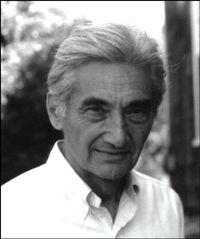
Howard Zinn
Howard Zinn

American historian known for his critical analysis of historical events and advocacy for social justice. His work emphasizes the connection between history and contemporary social issues, particularly focusing on the role of ordinary people in the historical process. more

You May Also Like

“What the states could not accomplish by law, they were more than willing to achieve by violence. The wholesale slaughter of African Americans in Colfax, Louisiana (1873), Wilmington, North Carolina (1898), and Ocoee, Florida (1920), resulted in the loss of hundreds of lives simply because whites were enraged that black people had voted.”

“Whites had already posted a sign on the black church in Taylor County, Georgia: "The first Negro to vote will never vote again." Snipes was not deterred. In July 1946, he cast his ballot in Taylor County's primary. In fact, he was the only black person to do so; and with that act of democratic bravery, Maceo Snipes signed his death warrant. A few days later four white men showed up at Snipes's house and demanded that he step outside. As he stood on the porch, they pointed their guns at him and began firing. Snipes staggered and fell to the ground. They just walked away. His mother ran out of the house and got him to the hospital, but in Jim Crow America, black patients did not have the right to health care. He lay in a room the size of a closet unattended for six hours bleeding, just bleeding. This strong man, this veteran, lingered for two more days, but the damage was too extensive, the medical treatment too slow, and Georgia's hate too deep.”

“America was paralyzed; on one hand, by the power of the Southern Democrats in Congress, whose inordinate political strength and control of key committees was based on their ability to win reelection after reelection because of massive disfranchisement and racial terror; and on the other, by the missionary-like belief that America was the champion of democracy and freedom in the battle against the Soviet Union, whose death grip on human rights had no limits.”

“The Civil Rights Act (1957), while seemingly a landmark piece of legislation, was actually a paper tiger that had no ability to protect the right to vote. The act did create the Civil Rights Commission, upgrade the Department of Justice's section on civil rights to a division, and authorize the U.S. attorney general to sue those violating the voting rights of American citizens. But it was—by design and implementation—no match for the entrenched resistance to black citizenship.”

“The VRA was nevertheless a seismic shift in thought, action, and execution for the U.S. government when compared with the Civil Rights Act of 1957 and its equally enfeebled companion legislation of 1960. Rather than passively waiting for locales to violate the rights of American citizens and then sitting still until those who had been routinely brutalized by this system made a formal complaint, the VRA put the responsibility for adhering to the Constitution onto state and local governments.”

“Paul Weyrich, a conservative activist and founder of the American Legislative Exchange Council (ALEC), which eventually crafted voter suppression legislation that spread like a cancer throughout the United States, was brutally clear: "I don't want everybody to vote.”

“All that had to happen was for the GOP to reinforce the lie of voter fraud, create the public perception of democracy imperiled, increase the groundswell to "protect the integrity of the ballot box," require exactly the type of identification that blacks, the poor, the young, and the elderly did not have, and, equally important, mask these acts of aggressive voter suppression behind the nobility of being "civic-minded.”