Quotessence
Home / Quotes / Quote by Kurt Vonnegut

Quote by Kurt Vonnegut

“Practicing an art, no matter how well or badly, is a way to make your soul grow, for heaven's sake. Sing in the shower. Dance to the radio. Tell stories. Write a poem to a friend, even a lousy poem. Do it as well as you possibly can. You will get an enormous reward. You will have created something.”

Quote by Kurt Vonnegut

Work

A Man Without a Country

A fictional narrative that delves into the psychological and emotional journey of an individual who feels disconnected from their homeland and society. more

Author
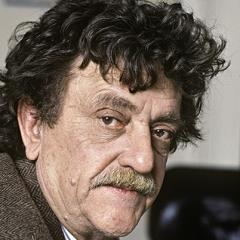
Kurt Vonnegut
Kurt Vonnegut

Kurt Vonnegut was an American writer known for his unique humor and profound satire. His works often explore themes of war, humanity, society, and politics. His most famous works include 'Slaughterhouse-Five' and 'Cat's Cradle'. His writing style has been widely appreciated by readers and has had a profound impact on literature. more

You May Also Like

“Evolution has no foresight. Complex machinery develops its own agendas. Brains — cheat. Feedback loops evolve to promote stable heartbeats and then stumble upon the temptation of rhythm and music. The rush evoked by fractal imagery, the algorithms used for habitat selection, metastasize into art. Thrills that once had to be earned in increments of fitness can now be had from pointless introspection. Aesthetics rise unbidden from a trillion dopamine receptors, and the system moves beyond modeling the organism. It begins to model the very process of modeling. It consumes evermore computational resources, bogs itself down with endless recursion and irrelevant simulations. Like the parasitic DNA that accretes in every natural genome, it persists and proliferates and produces nothing but itself. Metaprocesses bloom like cancer, and awaken, and call themselves I.”

“Everyone tries to make his life a work of art. We want love to last and we know that it does not last; even if, by some miracle, it were to last a whole lifetime, it would still be incomplete. Perhaps, in this insatiable need for perpetuation, we should better understand human suffering, if we knew that it was eternal. It appears that great minds are, sometimes, less horrified by suffering than by the fact that it does not endure. In default of inexhaustible happiness, eternal suffering would at least give us a destiny. But we do not even have that consolation, and our worst agonies come to an end one day. One morning, after many dark nights of despair, an irrepressible longing to live will announce to us the fact that all is finished and that suffering has no more meaning than happiness.”

“I hear the question upon your lips: What is it to be a colour? Colour is the touch of the eye, music to the deaf, a word out of the darkness. Because I’ve listened to souls whispering – like the susurrus of the wind – from book to book and object to object for tens or thousands of years, allow me to say that my touch resembles the touch of angels. Part of me, the serious half, calls out to your vision while the mirthful half sours through the air with your glances. I’m so fortunate to be red! I’m fiery. I’m strong. I know men take notice of me and that I cannot be resisted. I do not conceal myself: For me, delicacy manifests itself neither in weakness nor in subtlety, but through determination and will. So, I draw attention to myself. I’m not afraid of other colours, shadows, crowds or even of loneliness. How wonderful it is to cover a surface that awaits me with my own victorious being! Wherever I’m spread, I see eyes shine, passions increase, eyebrows rise and heartbeats quicken. Behold how wonderful it is to live! Behold how wonderful to see. I am everywhere. Life begins with and returns to me. Have faith in what I tell you.”

“When Van Gogh was a young man in his early twenties, he was in London studying to be a clergyman. He had no thought of being an artist at all. he sat in his cheap little room writing a letter to his younger brother in Holland, whom he loved very much. He looked out his window at a watery twilight, a thin lampost, a star, and he said in his letter something like this: "it is so beautiful I must show you how it looks." And then on his cheap ruled note paper, he made the most beautiful, tender, little drawing of it. When I read this letter of Van Gogh's it comforted me very much and seemed to throw a clear light on the whole road of Art. Before, I thought that to produce a work of painting or literature, you scowled and thought long and ponderously and weighed everything solemnly and learned everything that all artists had ever done aforetime, and what their influences and schools were, and you were extremely careful about *design* and *balance* and getting *interesting planes* into your painting, and avoided, with the most astringent severity, showing the faintest *acedemical* tendency, and were strictly modern. And so on and so on. But the moment I read Van Gogh's letter I knew what art was, and the creative impulse. It is a feeling of love and enthusiasm for something, and in a direct, simple, passionate and true way, you try to show this beauty in things to others, by drawing it. And Van Gogh's little drawing on the cheap note paper was a work of art because he loved the sky and the frail lamppost against it so seriously that he made the drawing with the most exquisite conscientiousness and care.”