Quotessence
Home / Quotes / Quote by Charles Dickens

Quote by Charles Dickens

“Happy, happy Christmas, that can win us back to the delusions of our childish days; that can recall to the old man the pleasures of his youth; that can transport the sailor and the traveller, thousands of miles away, back to his own fire-side and his quiet home!”

Quote by Charles Dickens

Work

The Pickwick Papers

Charles Dickens' 'The Pickwick Papers' is a seminal work of English literature, offering a humorous and insightful look into the social and political landscape of the time. The story revolves around the escapades of the members of the Pickwick Club, who embark on various adventures, encountering a diverse array of characters and situations that reflect the era's customs and values. more

Author

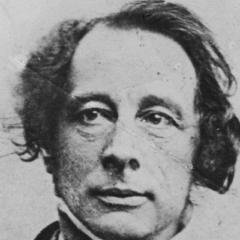
Charles Dickens
Charles Dickens

Charles Dickens, a British writer born on February 7, 1812, and died on June 9, 1870, is one of the greatest novelists of the 19th century. Known for his profound social criticism and vivid narrative style, Dickens' works extensively cover social reality, revealing various issues in the British society of the time. more

You May Also Like

“Your house, being the place in which you read, can tell us the position books occupy in your life, if they are a defense you set up to keep the outside world at a distance, if they are a dream into which you sink as if into a drug, or bridges you cast toward the outside, toward the world that interests you so much that you want to multiply and extend its dimensions through books.”

“No settled family or community has ever called its home place an “environment.” None has ever called its feeling for its home place “biocentric” or “anthropocentric.” None has ever thought of its connection to its home place as “ecological,” deep or shallow. The concepts and insights of the ecologists are of great usefulness in our predicament, and we can hardly escape the need to speak of “ecology” and “ecosystems.” But the terms themselves are culturally sterile. They come from the juiceless, abstract intellectuality of the universities which was invented to disconnect, displace, and disembody the mind. The real names of the environment are the names of rivers and river valleys; creeks, ridges, and mountains; towns and cities; lakes, woodlands, lanes roads, creatures, and people. And the real name of our connection to this everywhere different and differently named earth is “work.” We are connected by work even to the places where we don’t work, for all places are connected; it is clear by now that we cannot exempt one place from our ruin of another. The name of our proper connection to the earth is “good work,” for good work involves much giving of honor. It honors the source of its materials; it honors the place where it is done; it honors the art by which it is done; it honors the thing that it makes and the user of the made thing. Good work is always modestly scaled, for it cannot ignore either the nature of individual places or the differences between places, and it always involves a sort of religious humility, for not everything is known. Good work can be defined only in particularity, for it must be defined a little differently for every one of the places and every one of the workers on the earth. The name of our present society’s connection to the earth is “bad work” – work that is only generally and crudely defined, that enacts a dependence that is ill understood, that enacts no affection and gives no honor. Every one of us is to some extent guilty of this bad work. This guilt does not mean that we must indulge in a lot of breast-beating and confession; it means only that there is much good work to be done by every one of us and that we must begin to do it.”

“It's one thing to develop a nostalgia for home while you're boozing with Yankee writers in Martha's Vineyard or being chased by the bulls in Pamplona. It's something else to go home and visit with the folks in Reed's drugstore on the square and actually listen to them. The reason you can't go home again is not because the down-home folks are mad at you--they're not, don't flatter yourself, they couldn't care less--but because once you're in orbit and you return to Reed's drugstore on the square, you can stand no more than fifteen minutes of the conversation before you head for the woods, head for the liquor store, or head back to Martha's Vineyard, where at least you can put a tolerable and saving distance between you and home. Home may be where the heart is but it's no place to spend Wednesday afternoon.”