Quotessence
Home / Quotes / Quote by Mircea Eliade

Quote by Mircea Eliade

Author

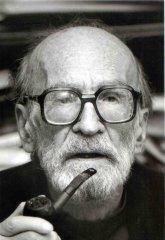
Mircea Eliade
Mircea Eliade

Mircea Eliade was a Romanian historian of religion and a prominent figure in the study of comparative religion. Born on March 13, 1907, in Bucharest, Romania, he passed away on April 22, 1986. His research focused on the history of religions, with a particular interest in the role of myth and ritual in human societies. more

You May Also Like

“Ask any fan, and she'll tell you there's something satisfyingly linear about baseball: three strikes, three outs. Four bases, nine innings. A lineup, for chrissake-you don't need to be an etymologist to see the meaning in that. But at the same time as that steady progression of three up, three down, then the next, then the next, it's going around and around, cycling through the order, running around the bases. Things get parabolic. There's the arc of up and down through the organization, from Single-A Carolina to the big time in Culver City, the tight arc of an infield-fly out and the majestic one of a game-winning homer.”

“Most men's minds are so constituted that they have to think by means of examples ; if you do not supply these, they will supply them for themselves, and if you leave it wholly to them, they will do it badly. On the other hand, if you start from familiar things, they are very quick to make the necessary generalizations. In a sense they are making such generalizations constantly; whenever they recognize the thing before them as a chair or a lamp-post, they are leaping from the particular to the general by a process of implicit classification.”

“Metaphor: «Entre escudos de malvivir, hizo al sayo su mal vestir» Answer: La cita sugiere que el antagonista, aunque ha acumulado riqueza y poder a través de actos sin escrúpulos, sigue siendo un ser vil y corrupto. Su "mal vestir" es un reflejo de su alma, manchada por la avaricia y el engaño, mostrando que, a pesar del oro que ha obtenido, no ha logrado escapar de la miseria moral que define su existencia.”