Quotessence
Home / Authors / Mircea Eliade
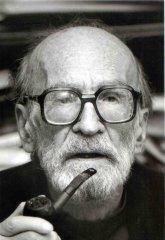
Mircea Eliade

Mircea Eliade Quotes

Historian

Filter quotes by topic

Famous Mircea Eliade Quotes

“In fact, this passion, which at first I had thought impossible, insignificant, sheer fantasy, which was inflamed by Maitreyi herself — who, I had so long belived, was in love with me but is in reality, in love with one — this passion has me in thrall and carries me far away, to an unknown and unearthly region of my soul, to some border territory of my mind where I am blissfully happy, radiant with grace. I have no name for that intimate realm.”

“Perhaps never before in history has the artist been so certain that the more daring, iconoclastic, absurd, and inaccessible he is, the more he will be recognized, praised, spoiled, idolatrized. In some countries the result has even been an academicism in reverse, the academicism of the “avant-garde” - to such a point that any artistic experience that makes no concessions to this new conformism is in danger of being stifled or ignored.”

“Her beauty is not conventional, it does not meet classic dictates. Her face is rebelliously expressive. She enchants in the magical sense of the world. I have to confess that I thought of her all night. And even now, instead of working, I visualize her, a pale silhouette in a sari of blue silk, all interwoven with gold thread. And her hair! The Persians were right, in their poetry, to compare women's hair to snakes. What will happen? I do not know. Probably I will forget her. Oh God, when will I find peace?”

“The perspective changes completely when the sense of the religiousness of the Cosmos becomes lost. This is what occurs when, in certain more highly evolved societies, the intellectual élites progressively detach themselves from the patterns of the traditional religion. Periodical sanctification of cosmic time then proves useless and without meaning. The gods are no longer accessible through the cosmic rhythms. The religious meaning of the repetition of paradigmatic gestures is forgotten. But repetition emptied of its religious content necessarily leads to a pessimistic vision of existence. When it is no longer a vehicle for reintegrating a primordial situation, and hence for recovering the mysterious presence of the gods, that is, when it is desacralized, cyclic time becomes terrifying; it is seen as a circle forever turning on itself, repeating itself to infinity.”

“As we have said before, for religious man nature is never only natural. Experience of a radically desacralized nature is a recent discovery; moreover, it is an experience accessible only to a minority in modem societies, especially to scientists. For others, nature still exhibits a charm, a mystery, a majesty in which it is possible to decipher traces of ancient religious values. No modern man, however irreligious, is entirely insensible to the charms of nature. We refer not only to the esthetic, recreational, or hygienic values attributed to nature, but also to a confused and almost indefinable feeling, in which, however, it is possible to recognize the memory of a debased religious experience.”

“A non-religious man today ignores what he considers sacred but, in the structure of his consciousness, could not be without the ideas of being and the meaningful. He may consider these purely human aspects of the structure of consciousness. What we see today is that man considers himself to have nothing sacred, no god; but still his life has a meaning, because without it he could not live; he would be in chaos. He looks for being and does not immediately call it being, but meaning or goals; he behaves in his existence as if he had a kind of center. He is going somewhere, he is doing something. We do not see anything religious here; we just see man behaving as a human being. But as a historian of religion, I am not certain that there is nothing religious here… I cannot consider exclusively what that man tells me when he consciously says, ‘I don’t believe in God; I believe in history,’ and so on. For example, I do not think that Jean-Paul Sartre gives all of himself in his philosophy, because I know that Sartre sleeps and dreams and likes music and goes to the theater. And in the theater he gets into a temporal dimension in which he no longer lives his ‘moment historique.’ There he lives in quite another dimension. We live in another dimension when we listen to Bach. Another experience of time is given in drama. We spend two hours at a play, and yet the time represented in the play occupies years and years. We also dream. This is the complete man. I cannot cut this complete man off and believe someone immediately when he consciously says that he is not a religious man. I think that unconsciously, this man still behaves as the ‘homo religiosus,’ has some source of value and meaning, some images, is nourished by his unconscious, by the imaginary universe of the poems he reads, of the plays he sees; he still lives in different universes. I cannot limit his universe to that purely self-conscious, rationalistic universe which he pretends to inhabit, since that universe is not human.”

“En resumen, la mayoría de los hombres -sin religión- comparten aún pseudo religiones y mitologías degradadas. Cosa que en nada nos asombra, desde el momento en que el hombre profano es el descendiente del homo religiosus y no puede anular su propia historia, es decir, los comportamientos de sus antepasados religiosos, que lo han constituido tal como es hoy día.”

“O văd şi acum. Storurile erau lăsate, şi în cameră era o penumbră misterioasă, o răcoare de o cu totul altă natură decât răcoarea celorlalte camere în care pătrunsesem până atunci. Nu ştiu de ce, mi se părea că totul pluteşte acolo într-o lumină verde; poate unde perdelele erau verzi. Căci, altminteri, camera era plină de fel de fel de mobile, şi lăzi, şi coşuri cu hârtii şi jurnale vechi. Dar mie mi se părea că e verde. Şi atunci, în clipa aceea, am înţeles ce este Sambo. Am înţeles că există aici, pe pământ, lângă noi, la îndemâna noastră şi totuşi invizibil celorlalţi, inaccesibil celor neiniţiaţi — există un spaţiu privilegiat, un loc paradisiac, pe care, dacă ai avut norocul să-l cunoşti, nu-l mai poţi uita, apoi, toată viaţa. Căci în Sambo simţeam că nu mai trăiesc aşa cum trăisem până atunci; trăiam altfel, într-o continuă, inexprimabilă fericire. Nu ştiu de unde izvora beatitudinea asta fără nume. Mai târziu, amintindu-mi de Sambo, am fost sigur că acolo mă aştepta Dumnezeu, şi mă lua în braţe îndată ce-i călcam pragul. N-am mai simţit, apoi, nicăieri şi niciodată, o asemenea fericire, în nici o biserică, în nici un muzeu; nicăieri şi niciodată.”

“As we said before, initiation lies at the core of any genuine human life. And this is true for two reasons. The first is that any genuine human life implies profound crises, ordeals, suffering, loss and reconquest of self, "death and resurrection." The second is that, whatever degree of fulfillment it may have brought him, at a certain moment every man sees his life as a failure. This vision does not arise from a moral judgment made on his past, but from an obscure feeling that he has missed his vocation; that he has betrayed the best that was in him. In such moments of total crisis, only one hope seems to offer any issue-the hope of beginning life over again. This means, in short, that the man undergoing such a crisis dreams of new, regenerated life, fully realized and significant. This is something other and far more than the obscure desire of every human soul to renew itself periodically, as the cosmos is renewed. The hope and dream of these moments of total crisis are to obtain a definitive and total renovatio, a renewal capable of transmuting life. Such a renewal is the result of every genuine religious conversion.”

“It must never be forgotten that initiatory death simultaneously signifies the end of the "natural," noncultural man, and passage to a new modality of existence-that of a being "born to spirit," that is, a being that does not live solely in an immediate reality. Thus initiatory death forms an integral part of the mystical process by which the novice becomes another, fashioned in accordance with the model revealed by the Gods or the mythical Ancestors. This is as much as to say that one becomes truly a man in proportion as one ceases to be a natural man and resembles a Supernatural Being.”

“Și totuși, Cosmosul, Viața au o funcție ambivalentă. Pe de-o parte, ele îl proiectează pe om în suferință și, grație karmei, îl integrează ciclului infinit al transmigrațiilor; pe de altă parte, îl ajută, indirect, să caute și să găsească „mântuirea” sufletului, autonomia, libertatea absolută (mokșa, mukti). Cu cât omul suferă mai mult, așadar cu cât este mai solidar cu Cosmosul, cu atât crește în el dorința eliberării, cu atât îl frământă mai mult setea de mântuire.”

“Maitreyi continuă totuşi cu o simplitate care începu să mă cucerească. Vorbea apei, vorbea cerului cu stele, pădurii, pămîntului. Îşi sprijini bine în iarbă pumnii purtînd inelul şi făgădui: ― Mă leg pe tine, pămîntule, că eu voi fi a lui Allan, şi a nimănui altuia. Voi creşte din el ca iarba din tine. Şi cum aştepţi tu ploaia, aşa îi voi aştepta eu venirea, şi cum îţi sunt ţie razele, aşa va fi trupul lui mie. Mă leg în faţa ta că unirea noastră va rodi, căci mi-e drag cu voia mea, şi tot răul, dacă va fi, să nu cadă asupra lui, ci asupră-mi, căci eu l-am ales. Tu mă auzi, mamă pămînt, tu nu mă minţi, maica mea. Dacă mă simţi aproape, cum te simt eu acum, şi cu mîna şi cu inelul, întăreşte-mă să-l iubesc totdeauna, bucurie necunoscută lui să-i aduc, viaţă de rod şi de joc să-i dau. Să fie viaţa noastră ca bucuria ierburilor ce cresc din tine. Să fie îmbrăţişarea noastră ca cea dinţii zi a monsoon-ului. Ploaie să fie sărutul nostru. Şi cum tu niciodată nu oboseşti, maica mea, tot astfel să nu obosească inima mea în dragostea pentru Allan, pe care cerul l-a născut departe, şi tu, maică, mi l-ai adus aproape.”

“Nu sunt pierdute decât acele bătălii pe care nu le începi niciodată. Nu ești învins decât dacă refuzi lupta. Altminteri, orice faci, orice încerci în această existență miraculoasă - sunt victorii; și cât ar fi ele de mutilate, nu trebuie să regreți că le-ai obținut. În conștiința omului modern există această gravă confuzie între victorie și premiu. Cei mai mulți dintre noi credem că am făcut un lucru bun numai dacă primim o recompensă; o felicitare, o distincție, o observație favorabilă. Și, dimpotrivă, socotim eșuat acele acte ale noastre care au trecut neobservate, sau au fost privite cui neîncredere, sau de-a dreptul cu dispreț.”

“Omul religios, chiar şi cel mai „primitiv”, nu se împotriveşte progresului, în principiu, ci îl acceptă, atribuindu-i însă o origine şi o dimensiune divine. Tot ceea ce, din perspectiva modernă, ni s-ar părea aducător de „progres” (de orice fel – social, cultural, tehnic şi aşa mai departe) în comparaţie cu o situaţie anterioară, a fost asumat de către societăţile primitive în decursul lungii lor istorii, ca un şir de revelaţii divine.”

“The interest of initiation for an understanding of archaic mentality lies predominantly in its showing us that the true man-the spiritual man-is not given, is not the result of a natural process. He is "made" by the old masters, in accordance with the models revealed by the Divine Beings and preserved in the myths. These old masters constitute the spiritual elites of archaic societies. It is they who know, who know the world of spirit, the truly human world. Their function is to reveal the deep meaning of existence to the new generations and to help them assume the responsibility of being truly men and hence of participating in culture. But since for archaic societies "culture" is the sum of the values received from Supernatural Beings, the function of initiation may be reduced to this : to each new generation, it reveals a world open to the transhuman, a world that, in our philosophical terminology, we should call transcendental.”

“A religious phenomenon will only be recognized as such if it is grasped at its own level, that is to say, if it is studied as something religious. To try to grasp the essence of such phenomenon by means of physiology, psychology, sociology, economics, linguistics, art or any other study is false; it misses the one unique and irreducible element in it - the element of the sacred.”

“The history of religions reaches down and makes contact with that which is essentially human: the relation of man to the sacred. The history of religions can play an extremely important role in the crisis we are living through. The crises of modern man are to a large extent religious ones, insofar as they are an awakening of his awareness to an absence of meaning.”

“When the sacred manifests itself in any hierophany, there is not only a break in the homogeneity of space; there is also a revelation of an absolute reality, opposed to the nonreality of the vast surrounding expanse. The manifestation of the sacred ontologically founds the world. In the homogenous and infinite expanse, in which no point of reference is possible and hence no orientation can be established, the hierophany reveals an absolute fixed point, a center.”