Quotessence
Home / Quotes / Quote by Rabindranath Tagore

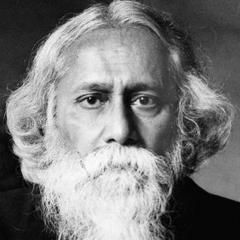
Quote by Rabindranath Tagore

“In learning a language, when from mere words we reach the laws of words, we have gained a great deal. But if we stop at that point and concern ourselves only with the marvels of the formation of a language, seeking the hidden reason of all its apparent caprices, we do not reach that end, for grammar is not literature… When we come to literature, we find that, though it conforms to the rules of grammar, it is yet a thing of joy; it is freedom itself. The beauty of a poem is bound by strict laws, yet it transcends them. The laws are its wings. They do not keep it weighed down. They carry it to freedom. Its form is in law, but its spirit is in beauty. Law is the first step toward freedom, and beauty is the complete liberation which stands on the pedestal of law. Beauty harmonizes in itself the limit and the beyond – the law and the liberty.”

Quote by Rabindranath Tagore

Book:Sadhana

Work

Sadhana

Sadhana is a narrative that delves into the transformative experiences of a character's quest for spiritual enlightenment. more

Author

Rabindranath Tagore
Rabindranath Tagore

Rabindranath Tagore, a renowned Indian poet, writer, philosopher, and social activist, was born on May 7, 1861, in Calcutta, and passed away on August 7, 1941. Tagore's works blend the influences of traditional Indian literature and Western literature, and his poetry, novels, plays, and essays have won the hearts of readers worldwide. He was the first Asian writer to win the Nobel Prize in Literature, and his works have had a profound impact on world literature. more

You May Also Like

“It's the same struggle for each of us, and the same path out: the utterly simple, infinitely wise ultimately defiant act of loving one thing and then another, loving our way back to life... Maybe being perfectly happy is not really the point. Maybe that is only some modern American dream of the point, while the truer measure of humanity is the distance we must travel in our lives, time and again, "twixt two extremes of passion--joy and grief," as Shakespeare put it. However much I've lost, what remains to me is that I can still speak to name the things I love. And I can look for safety in giving myself away to the world's least losable things.”

“What you have made me see,' answered the Lady, 'is as plain as the sky, but I never saw it before. Yet is has happened every day. One goes into the forest to pick food and already the thought of one fruit rather than another has grown up in one’s mind. Then, may it be, one finds a different fruit and not the fruit one thought of. One joy was expected and another is given. But this I had never noticed before–that the very moment of the finding there is in the mind a kind of thrusting back, or setting aside. The picture of the fruit you have not found is still, for a moment, before you. And if you wished–if it were possible to wish–you could keep it there. You could send your soul after the good you had expected, instead of turning it to the good you had got. You could refuse the real good; you could make the real fruit taste insipid by thinking of the other.”

“Modern man is full of platitudes about living life to its fullest, with catchy keychain phrases and little plaques for kitchen walls. But if you've never retreated to the solitude of a dark room and listened to Beethoven's Ninth from start to finish, you know nothing. For music is a transcendental exploration of human emotion and experience, the very fabric of life in its purest form. And the Ninth our greatest musical achievement.”