Quotessence
Home / Quotes / Quote by Thomas Hardy

Quote by Thomas Hardy

“It appears that ordinary men take wives because possession is not possible without marriage, and that ordinary women accept husbands because marriage is not possible without possession; with totally differing aims the method is the same on both sides. But the understood incentive on the woman's part was wanting here. Besides, Bathsheba's position as absolute mistress of a farm and house was a novel one, and the novelty had not yet begun to wear off.”

Quote by Thomas Hardy

Work

Far From the Madding Crowd

This novel follows the romantic entanglements of Bathsheba Everdene, a strong-willed woman living in the English countryside, as she navigates love, marriage, and the complexities of her social environment. more

Author
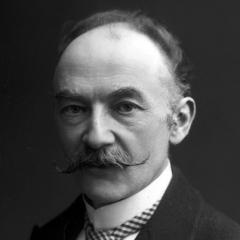
Thomas Hardy
Thomas Hardy

Thomas Hardy, a British novelist born on June 2, 1840, and died on January 11, 1928, is renowned for his novels that depict rural life, reflecting the social changes in 19th-century England. His works often carry a sense of pessimism, depicting the fates of characters with sympathy. more

You May Also Like

“As a matter of fact, that's the reason why I've learned to speak this language, and to write it too: so I can speak in the place of a dead man, so I can finish his sentences for him. The murderer got famous, and his story's too well written for me to get any ideas about imitating him. He wrote in his own language. Therefore I'm going to do what was done in this country after Independence: I'm going to take the stones from the old houses the colonists left behind, remove them one by one, and build my own house, my own language. The murderer's words and expressions are my unclaimed goods. Besides, the country's littered with words that don't belong to anyone anymore.”

“Standing on the top of this Monte d'Ora watching the sun come radiantly alive, Turi Guiliano was filled with youthful glee that he had escaped his enemies. He would never obey another human being again. He would choose who should live and who should die, and there was no doubt in his mind that all he would do would be for the glory and freedom of Sicily, for good and not for evil. That he would only strike for the cause of justice, to help the poor. that he would win every battle, that he would win the love of the oppressed. He was twenty years old.”

“I wore you on me at all times Like I now carry my pen. Unlike your own opinion my Belongings must have a function. You bled through the ink of my lines and To be my subject nursed your thirst. Was it my fault, or your own, that you forgot —I do not deal in tender verse.”

“To share our independence, to me, is synonym with “maturity”. Maturity means the combination of courage—to do something—and consideration—to stop doing that when it’s required. Kind of like the gas and brake in a vehicle. “To depend on Love isn’t the same as to depend on a single person to feel that connection towards Love. The more Love that flows through any given relationship, the more love that can flow towards other relationships, in contrast, a lack of Love in a relationship calls us to look out for anything else that could make us feel connected, feel accepted. “Most people aren’t ready for the kind of commitment and dedication required to ‘merge’ in someone else while retaining their individuality, and after a very short time, they feel suffocated and abandon such relationship. “In order to identify when we are receiving this energy from a particular—limited—individual, or when it is coming from Source, the Love that flows from Source is unlimited and increases constantly, whilst the other one needs constant recharge to continue to function. It’s as clear as the difference between sunlight and a torchlight.”

“Self-government is our right," [Roger Casement] declared. "A thing born in us at birth; a thing no more to be doled out to us or withheld from us by another people than the right to life itself - than the right to feel the sun or smell the flowers, or to love our kind. . . . Where men must beg with bated breath for leave to subsist in their own land, to think their own thoughts, to sing their own songs, to garner the fruits of their own labours. . . then surely it is braver, a saner and a truer thing, to be a rebel . . . than tamely to accept it as the natural lot of men.”