Quotessence
Home / Quotes / Quote by Alexandre Dumas

Quote by Alexandre Dumas

“Conceal your wounds when you have any; silence is the last joy of the unhappy. Beware of giving anyone the clue to your griefs; the curious suck our tears as flies suck the blood of a wounded hart.”

Quote by Alexandre Dumas

Work

The Three Musketeers

Alexandre Dumas' 'The Three Musketeers' is a renowned historical novel that delves into the lives of d'Artagnan and his three fellow Musketeers, Athos, Porthos, and Aramis. The story is filled with intrigue, swordplay, and political machinations, set against the backdrop of the French monarchy. The novel is celebrated for its vivid characters, thrilling plot, and its exploration of themes such as loyalty, friendship, and honor. more
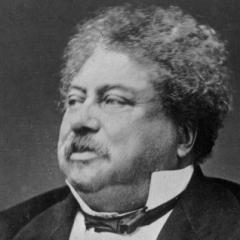
Author

Alexandre Dumas
Alexandre Dumas

Alexandre Dumas, a renowned French writer, was born on July 24, 1802, and died on December 5, 1870. He is famous for his historical and adventure novels, with notable works including 'The Three Musketeers' and 'The Count of Monte Cristo'. more

You May Also Like

“Deep meditation means emptiness, nothingness, a state of utter silence, where not even the idea of "I" exists. One is, but with no idea of "I". It is a state of egolessness. Deva Emanuel said after a satsang that when I tolled the Tibetan bells for the second time at the end of the satsang, he suddenly came back from the deep silence, where there is no "I". There are three things that happens out of the silence and emptiness: prayer, grace and compassion. The first flower is prayer, which is not of words, but of silent gratitude. One has to be absolutely silent, but there is gratitude because it is to experience the splendor of life. Thousand and one flowers bloom within you, and suddenly the spring has come.  The silence and emptiness is overflowing with fragrance. The moment you drop the "I", the beyond descends into you. You create a silence and  a vacuum, and immediately the beyond fills it. The second flower is grace, because when you are silent, prayerful and thankful, a subtlegrace surrounds you. Grace means that the beyond has touched you. God has touchedyou. This very touch is transforming, and you are no longer ordinary. You become silent and extraordinary when you drop the ego. And by dropping the ego, you become touched by God. That is what grace is. The third flower is compassion. When you are silent and prayerful that is your inner experience. That prayerfulness will radiate from your body, your words,your actions and the way you are silent. And all your actions will come out of compassion. Passions are unconscious, compassion is conscious. You act, but your actions are totally different. Now they come out of love. When there is silence, prayer and compassion, you have come home.”

“Silence To Be Heard Thinking of words you dare not say burning questions that seem left behind this candle has been burning long enough scattered thoughts that weigh on your mind. They think it’s over, so long ago it’s your silence that let it pass why did you listen to cold dark heart; how long did they think this would last? Your heart gets filled with a gentle touch Jesus Christ stands strong at your door freedom rushes inside your chest as you speak the words to be heard.”

“. . . the only legitimate reason that kingship is not attractive to us is because in this age and this world the only kings available are finite and sinful. Listen to C. S. Lewis describe why he believes in democracy: A great deal of democratic enthusiasm descends from the ideas of people like Rousseau, who believed in democracy because they thought mankind so wise and good that everyone deserved a share in the government. The danger of defending democracy on those grounds is that they’re not true. . . I find that they’re not true without looking further than myself. I don’t deserve a share in governing a hen-roost, much less a nation. . . . The real reason for democracy is . . . Mankind is so fallen that no man can be trusted with unchecked power over his fellows. Aristotle said that some people were only fit to be slaves. I do not contradict him. But I reject slavery because I see no men fit to be masters.1 If there could be a king who is not limited in his wisdom and power and goodness and love for his subjects, then monarchy would be the best of all governments. If such a ruler could ever rise in the world—with no weakness, no folly, no sin—then no wise and humble person would ever want democracy again. The question is not whether God broke into the universe as a king. He did. The question is: What kind of king is he? What difference would his kingship make for you?”