Quotessence
Home / Quotes / Quote by Jean Baudrillard

Quote by Jean Baudrillard

“The virtuality of war is not, then, a metaphor. It is the literal passage from reality into fiction, or rather the immediate metamorphosis of the real into fiction. The real is now merely the asymptotic horizon of the Virtual. And it isn't just the reality of the real that's at issue in all this, but the reality of cinema. It's a little like Disneyland: the theme parks are now merely an alibi - masking the fact that the whole context of life has been disneyfied. It's the same with the cinema: the films produced today are merely the visible allegory of the cinematic form that has taken over everything - social and political life, the landscape, war, etc. - the form of life totally scripted for the screen. This is no doubt why cinema is disappearing: because it has passed into reality. Reality is disappearing at the hands of the cinema and cinema is disappearing at the hands of reality. A lethal transfusion in which each loses its specificity. If we view history as a film - which it has become in spite of us - then the truth of information consists in the postsynchronization, dubbing and sub-titling of the film of history.”

Quote by Jean Baudrillard

Work

The Intelligence of Evil or the Lucidity Pact

Browse quotes and source details for this work. more

Author
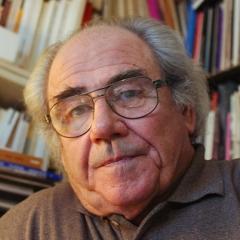
Jean Baudrillard
Jean Baudrillard

Jean Baudrillard was a French philosopher known for his critical studies on consumerism, media, and semiotics. His theories have had a profound impact on postmodernism and cultural studies. more

You May Also Like

“As no man of large experience of humanity, however quietly carried it may be, can fail to be invested with an interest peculiar to the possession of such knowledge, Physician was an attractive man. Even the daintier gentlemen and ladies who had no idea of his secret, and who would have been startled out of more wits than they had, by the monstrous impropriety of his proposing to them 'Come and see what I see!' confessed his attraction. Where he was, something real was. And half a grain of reality, like the smallest portion of some other scarce natural productions, will flavour an enormous quantity of diluent.”

“The greatest lie of all is that we live in a strictly empirical world. We actually live in an analytic, mathematical world of reason and logic, and its flip side is the empirical world of phenomena. Your reason isn’t empty and futile, dealing only with ideals and nothing real. Your reason, just like your senses, feelings and intuitions, directly encounters reality, but noumenally rather than phenomenally, rationally rather than irrationally.”

“Contrary to what a narrowly positivist conception of human sciences would like, these are not only about the real world, but also about two other dimensions, just as important: the imaginary dimension, which governs representations and fictions; and the symbolic dimension, which governs meanings and interpretations, more or less conscious. These three dimensions of reality — the reality of lived situations, the imagination as conveyed by discursive or iconic forms, the symbolism of productions of meaning — cannot be reduced to each other, because they possess their own necessity and coherence.”

“All this follows a kind of dizzying whirl, as though this growing abstraction, this rise of an integral hyperreality, were itself a response to a hypersensitivity to certain final conditions. But what final conditions? Reality will have been only a fleeting solution then. Indeed, it merely succeeded others, such as the religious illusion in all its forms. This truth, this rationality, this objective reality - which we took in exchange for religious values, imagining that we had moved definitively beyond them - is only the disenchanted heir to those same religious values. It does not seem ever genuinely to have gained the upper hand, as it happens, nor does it appear that the transcendent solution is entirely past and gone or that God is dead, even though we now deal only with his metastases. Perhaps that solution was merely eclipsed and it is emerging from its eclipse in reaction to this very intensification of reality, to the weight of an ever more real, ever more secular world in which there is no possibility of redemption. Reality too is a hinterworld and a substitutive illusion, and in fact we live in this 'real' world as in a hinterworld. It is merely that we have succeeded in negotiating it in a way that does without heaven and hell (though not without debt and guilt, for which we are now answerable to ourselves). Have we gained or lost on the deal? There is no answer. We have exchanged one illusion for another, and it turns out that the material, objective illusion, the illusion of reality, is as fragile as the illusion of God and no longer protects us, once the euphoria of science and the Enlightenment is past, from the fundamental illusion of the world and its absence of truth. In fact, this secular, desacralized reality has slowly become a useless function, the fiction of which we are desperately attempting to rescue (as once we attempted to rescue the existence of God), but which, deep down, we do not know how to rid ourselves of.”