“You remember that lovely passage in which Plato describes how a young Greek should be educated, and with what insistence he dwells upon the importance of surroundings, telling us how the lad is to be brought up in the midst of fair sights and sounds, so that the beauty of material things may prepare his soul for the reception of the beauty that is spiritual. Insensibly, and without knowing the reason why, he is to develop that real love of beauty which, as Plato is never weary of reminding us, is the true aim of education. By slow degrees there is to be engendered in him such a temperament as will lead him naturally and simply to choose the good in preference to the bad, and, rejecting what is vulgar and discordant, to follow by fine instinctive taste all that possesses grace and charm and loveliness. Ultimately, of course, this taste is to become critical and self-conscious, but at first it is to exist purely as a cultivated instinct, and ‘he who has received this true culture of the inner man will with clear and certain vision perceive the omissions and faults in art or nature, and with a taste that cannot err, while he praises, and finds his pleasure in what is good, and receives it into his soul, and so becomes good and noble, will rightly blame and hate the bad, now in the days of his youth, even before he is able to know the reason why:’ and so, when, later on, the critical and self-conscious spirit develops in him, he ‘will recognise and salute it as a friend with whom his education has made him long familiar.”
Quote by Oscar Wilde
Author
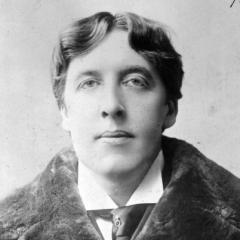
Oscar Wilde
Oscar Wilde, born on October 16, 1854, in Ireland, and died on November 30, 1900, was a renowned Irish writer, playwright, and poet. His works are known for their wit, satire, and unique style, with notable works including 'The Picture of Dorian Gray' and 'Lady Windermere's Fan'. more
You May Also Like
Source: Character Strengths and Virtues: A Handbook and Classification
Source: The Human Comedy
“If you can’t be good, at least be good at it.”
Source: Roomies
Source: In Limbo
Source: Boldly Comes Justice: Sentient Not Silent
Source: The Matter Is Life
“Train like you've never won, compete like you've never lost.”