Quotessence
Home / Quotes / Quote by Aleksandr Solzhenitsyn

Quote by Aleksandr Solzhenitsyn

“Human beings are born with different capacities. If they are free, they are not equal. And if they are equal, they are not free.”

Quote by Aleksandr Solzhenitsyn

Author
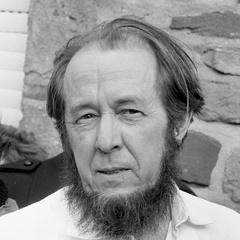
Aleksandr Solzhenitsyn

Aleksandr Solzhenitsyn, a Russian novelist, was born on December 11, 1918, and died on August 3, 2008. He is renowned for his works that profoundly exposed the dark side of the Soviet political system and is considered one of the greatest writers of the 20th century. more

You May Also Like

“Fights between individuals, as well as governments and nations, invariably result from misunderstandings in the broadest interpretation of this term. Misunderstandings are always caused by the inability of appreciating one another's point of view. This again is due to the ignorance of those concerned, not so much in their own, as in their mutual fields. The peril of a clash is aggravated by a more or less predominant sense of combativeness, posed by every human being. To resist this inherent fighting tendency the best way is to dispel ignorance of the doings of others by a systematic spread of general knowledge. With this object in view, it is most important to aid exchange of thought and intercourse.”

“One of the great tragedies of life is that men seldom bridge the gulf between practice and profession, between doing and saying. A persistent schizophrenia leaves so many of us tragically divided against ourselves. On the one hand, we proudly profess certain sublime and noble principles, but on the other hand, we sadly practise the very antithesis of these principles. How often are our lives characterised by a high blood pressure of creeds and an anaemia of deeds! We talk eloquently about our commitment to the principles of Christianity, and yet our lives are saturated with the practices of paganism. We proclaim our devotion to democracy, but we sadly practise the very opposite of the democratic creed. We talk passionately about peace, and at the same time we assiduously prepare for war. We make our fervent pleas for the high road of justice, and then we tread unflinchingly the low road of injustice. This strange dichotomy, this agonising gulf between the ought and the is, represents the tragic theme of man's earthly pilgrimage.”