Quotessence
Home / Quotes / Quote by Jean Baudrillard

Quote by Jean Baudrillard

“The most beautiful of all photographs are those taken of savages in their natural surroundings. The savage is always confronting death, and he confronts the lens in exactly the same manner. He does not ham it up, nor is he indifferent. He always poses; he faces up to the camera. His achievement is to transform this technical operation into a face-to-face confrontation with death. This is what makes these pictures such powerful and intense photographic objects. As soon as the lens fails to capture this pose, this provocative obscenity of the object facing death, as soon as the subject begins to collude with the lens, and the photographer too becomes subjective, the 'great game' of photography is over. Exoticism is dead. Today it is very hard indeed to find a subject - or even an object - that does not collude with the camera lens. The only trick here, generally speaking, is to be ignorant of how one's subjects live. This gives them a certain aura of mystery, a savagery, which the successful picture captures. It also captures a gleam of ingenuity, of fatality, in their faces, betraying the fact that they do not know who they are or how they live. A glow of impotence and awe that is completely lacking in our tribes of worldly, devious, fashion-conscious and self-regarding people, always well-versed in the subject of themselves - and hence devoid of all mystery. For such people the camera is merciless.”

Quote by Jean Baudrillard

Work

The Transparency of Evil: Essays in Extreme Phenomena

Browse quotes and source details for this work. more

Author
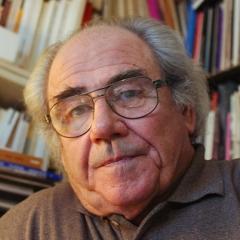
Jean Baudrillard
Jean Baudrillard

Jean Baudrillard was a French philosopher known for his critical studies on consumerism, media, and semiotics. His theories have had a profound impact on postmodernism and cultural studies. more

You May Also Like

“He was so staggered that he started to laugh, but his laughter subsided almost at once, and in its place he felt a wave of fury and despair roll over him at the sheer inexorability of late-capitalist degradation not just of the environment, not just of civic institutions, not just of intellectual and political ideals, but worse, of his own expectations, of what he even felt was possible any more—a familiar surge of grief and helpless rage at the reckless, wasteful, soulless, narcissistic, barren selfishness of the present day, and at his own political irrelevance and impotence, and at the utter shamelessness with which his natural inheritance, his future, had been either sold or laid to waste by his parents’ generation, trapping him in a perpetual adolescence that was further heightened by the infantilising unreality of the Internet as it encroached upon, and colonised, real life—‘real life,’ Tony thought, with bitter air quotes, for late capitalism would admit nothing ‘real’ beyond the logic of late capitalism itself, having declared self-interest the only universal, and profit motive the only absolute, and deriding everything that did not serve its ends as either a contemptible weakness or a fantasy.”

“Regardless of the subject of my films … I am looking for a way of evoking in audiences feelings similar to my own: the physically painful impotence and sorrow that assail me when I see a man weeping at the bus stop, when I observe people struggling vainly to get close to others, when I see someone eating up the left-overs in a cheap restaurant, when I see the first blotches on a woman's hand and know that she too is bitterly aware of them, when I see the kind of appalling and irreparable injustice that so visibly scars the human face. I want this pain to come across to my audience, to see this physical agony, which I think I am beginning to fathom, to seep into my work.”

“Well, Espen, you're no drug addict, so why do you beg?" "Because it's my mission to be mirror for mankind so that they can see which actions are great and which are small." "And which are great?" Espen sighed in despair, as though weary of repeating the obvious. "Charity. Sharing and helping your neighbor. The Bible deals with nothing else. In fact, you have to search extremely hard to find anything about sex before marriage, abortion, homosexuality, or a woman's right to speak in public. But, of course, it is easier for Pharisees to talk aloud about subordinate clauses than to describe and perform the great actions the Bible leaves us in no doubt about: You have to give half of what you own to someone who has nothing. Thousands of people are dying every day without hearing the words of God because these Christians will not let go of their earthly goods. I'm giving them a chance to reflect.”