Quotessence
Home / Quotes / Quote by Sri Aurobindo

Quote by Sri Aurobindo

“O Force-compelled, Fate-driven earth-born race, O petty adventurers in an infinite world And prisoners of a dwarf humanity, How long will you tread the circling tracks of mind Around your little self and petty things? 04.03_098:008”

Quote by Sri Aurobindo

Work

Savitri: A Legend and a Symbol

This literary work is a retelling of the ancient Indian legend of Savitri, who wins the hand of death for her husband. The poem is rich in symbolism and philosophical depth, offering readers a profound exploration of human emotions and the human condition. more

Author
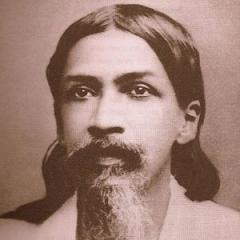
Sri Aurobindo
Sri Aurobindo

Sri Aurobindo, a philosopher, poet, and politician from India, was born on August 15, 1872, and passed away on December 5, 1950. He is renowned for his profound philosophical thoughts and his contributions to the spiritual revival of India. more

You May Also Like

“Glyphosate also interferes with ATP production by affecting your mitochondrial membranes. When coupled with the so-called inert solvents included in Roundup, the toxicity of glyphosate is magnified as much as 2,000-fold. This makes the membrane more permeable, allowing the glyphosate to go straight to the heart of the mitochondria.”

“But aren't all great quests folly? El Dorado and the Fountain of Youth and the search for intelligent life in the cosmos-- we know what's out there. It's what isn't that truly compels us. Technology may have shrunk the epic journey to a couple of short car rides and regional jet lags-- four states and twelve hundred miles traversed in an afternoon-- but true quests aren't measured in time or distance anyway, so much as in hope. There are only two good outcomes for a quest like this, the hope of the serendipitous savant-- sail for Asia and stumble on America-- and the hope of scarecrows and tin men: that you find out you had the thing you sought all along.”

“One thing she realized soon was that the rain here was eternal. The weather must have changed since the Emperor's time, because now the tower loomed constantly in its cloud of drizzle; all the long afternoons rain trickled in runnels and gutters and spouts, spattering through gargoyles of hideous beasts and goblins that spat far down on the heads of hurrying clerks. Always the roofs ran with water; it dripped and plopped and splashed through culverts and drains, or sheeted down, a relentless liquid gurgle that never stopped, until she started to imagine that this was the song the tower sang, through all the throats and mouths and pipes of its endless body.”

“She stared out. She saw a vastness, a rising shape, indistinct in the rain, gray in the misty drizzle. At first she had thought it was a cloud, a great bank of fog drifting up over the mountains, but now she realized with a cold awe that it was real, a vast building climbing the mountainside, rising in a countless series of rooms, stairways, balconies, and galleries, far away and immense, its topmost roofs white with snow. And up there, like a needle sharp with ice, one uttermost pinnacle flew the remote black pennant of the Watch. The Tower of Song.”