“In all racial groups, students from wealthy households tend to score better than those who are poor, but income does not explain group differences. A study by McKinsey and Company found that white fourth graders living in poverty scored higher—by the equivalent of about half-a-year’s instruction—than black fourth graders who were not poor. These differences increase in high school. On the 2009 math and verbal SAT tests, whites from families with incomes of less than $20,000 not only had an average combined score that was 117 points (out of 1600) higher than the average for all blacks, they even outscored by 12 points blacks who came from families with incomes of $160,000 to $200,000. Educators and legislators have not ignored the problem. The race gap in achievement is such a preoccupation that in 2007, 4,000 educators and experts attended an “Achievement Gap Summit” in Sacramento. They took part in no fewer than 125 panels on ways to help blacks and Hispanics do as well as whites and Asians. Overwhelming majorities in Congress passed the No Child Left Behind Act in 2002 to improve student performance and bridge achievement gaps. The government budgeted $24.4 billion for the program for fiscal year 2007, and its requirements for “Adequate Yearly Progress” have forced change on many schools. This is only the latest effort in more than 25 years of federal involvement. The result? In 2009, Chester E. Finn, Jr., a former education official in the Reagan administration, put it this way: “This is a nearly unrelenting tale of woe and disappointment. If there’s any good news here, I can’t find it.”
Quote by Jared Taylor
Work
White Identity: Racial Consciousness in the 21st Century
Browse quotes and source details for this work. more
Author
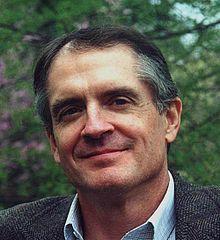
Jared Taylor
Jared Taylor, born on September 15, 1951, is an American journalist known for his views on racism and immigration issues. He was the editor of 'American Renaissance' magazine and has contributed articles to various publications, including 'The American Conservative' and 'The New American'. more
You May Also Like
Source: The Darkening Age: The Christian Destruction of the Classical World
“Be uniquely you. Stand out. Shine. Be colorful. The world needs your prismatic soul!”
“Know Yourself: Grow Your Wealth”
Source: My Style, My Way: Top Experts Reveal How to Create Yours Today
Source: The Power of Civility: Top Experts Reveal the Secrets to Social Capital
Source: The Autobiography Of A Stock
Source: The journey
Source: Ancient Egyptian Literature, Volume I: The Old and Middle Kingdoms